Islamic dietary laws
Islamic dietary laws provide a set of rules as to what Muslims are allowed to eat and what they are not. These rules, while based on religion, are also practiced as a means of maintaining health and hygiene. The dietary laws are derived from commands found in the Qur'an, the holy book of Islam, as well as the Hadith and Sunnah, collections of routines and sayings of the Prophet Muhammad.
Halal[edit]
Halal is an Arabic term which means permissible. In terms of food, it refers to food and drinks that are permissible for Muslims under Islamic law, as defined in the Qur'an. The opposite of halal is haram, which means forbidden. In addition to these, a third category, mashbooh, is also recognized, which means doubtful or questionable.
Haram[edit]
Haram is an Arabic term meaning forbidden. This term is used to designate food seen as forbidden according to Islamic law. The criteria specify both what foods are allowed, and how the food must be prepared. The foods addressed are mostly types of meat and animal tissue.
Mashbooh[edit]
Foods that are not clearly halal or haram fall into the category of mashbooh. These are foods that are not clearly defined in the Islamic doctrine and therefore are considered doubtful.
Dietary Rules[edit]
The dietary rules of Islam are based on the teachings of the Qur'an and the traditions of the Prophet Muhammad. They include the following:
- All animals must be slaughtered in the name of Allah.
- The animal must be healthy at the time of slaughter.
- Blood must be drained from the veins.
- Certain animals and birds, such as pigs and vultures, are considered impure and cannot be consumed.
- Intoxicating drinks and drugs are haram.
See Also[edit]

This WikiMD article can only be edited by registered and verified editors. You can log in or register.
-
 Islamic dietary laws
 -
 Islamic dietary laws
 -
 Islamic dietary laws
 -
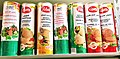 Islamic dietary laws


Sponsored Health Resource

W8MD Weight Loss, Sleep & MedSpa
Looking for physician-supervised weight loss, semaglutide, tirzepatide, or GLP-1 receptor agonist options? W8MD helps eligible patients in New York City, Brooklyn, New Jersey, Connecticut, Pennsylvania, Delaware, and greater Philadelphia with medical weight loss, sleep medicine, and long-term maintenance support.
GLP-1 specials: Affordable GLP-1 injections NYC and Philadelphia starting from $29.99/week and up for semaglutide with insurance accepted for qualifying visits, and $45/week and up for tirzepatide with insurance accepted for qualifying visits. Self-pay options start from $59.99/week and up for semaglutide and $69.99/week and up for tirzepatide.
- Medical weight loss NYC
- Affordable GLP-1 injections NYC
- Budget GLP-1 weight loss shots Philadelphia
- New Jersey medical weight loss
- NYC medical weight loss blog
- Philadelphia weight loss blog
- Sleep medicine and sleep apnea services
- W8MD MedSpa and wellness
Book a W8MD appointment · View GLP-1 specials
Paid promotional message. Eligibility, pricing, insurance coverage, medication availability, and results vary. Medical evaluation required.

Medical Disclaimer: WikiMD is for informational purposes only and is not a substitute for professional medical advice. Content may be inaccurate or outdated and should not be used for diagnosis or treatment. Always consult your healthcare provider for medical decisions. Verify information with trusted sources such as CDC.gov and NIH.gov. By using this site, you agree that WikiMD is not liable for any outcomes related to its content. See full disclaimer.
Credits:Most images are courtesy of Wikimedia commons, and templates, categories Wikipedia, licensed under CC BY SA or similar.
Translate page: - East Asian
中文,
日本,
한국어,
South Asian
हिन्दी,
தமிழ்,
తెలుగు,
Urdu,
ಕನ್ನಡ,
Southeast Asian
Indonesian,
Vietnamese,
Thai,
မြန်မာဘာသာ,
বাংলা
European
español,
Deutsch,
français,
Greek,
português do Brasil,
polski,
română,
русский,
Nederlands,
norsk,
svenska,
suomi,
Italian
Middle Eastern & African
عربى,
Turkish,
Persian,
Hebrew,
Afrikaans,
isiZulu,
Kiswahili,
Other
Bulgarian,
Hungarian,
Czech,
Swedish,
മലയാളം,
मराठी,
ਪੰਜਾਬੀ,
ગુજરાતી,
Portuguese,
Ukrainian

