Melatonin receptor agonist
Melatonin receptor agonists are a class of drugs that mimic the action of melatonin, a hormone produced by the pineal gland that is involved in regulating the sleep-wake cycle. These agonists are used in the treatment of various sleep disorders, including insomnia, Delayed Sleep Phase Syndrome (DSPS), and certain types of chronic sleep disorders. By activating the melatonin receptors, these drugs help to promote sleepiness and adjust the body's internal clock.
Mechanism of Action[edit]
Melatonin receptor agonists work by binding to and activating the melatonin receptors in the brain. There are two main types of melatonin receptors, MT1 and MT2, both of which are G protein-coupled receptors. Activation of MT1 receptors is thought to promote sleep, while activation of MT2 receptors is believed to influence the timing of the circadian rhythm. By targeting these receptors, melatonin receptor agonists can help to induce sleep and regulate sleep patterns.
Clinical Uses[edit]
Melatonin receptor agonists are primarily used in the treatment of sleep disorders. They are particularly effective in treating:
- Insomnia: Especially in individuals who have difficulty falling asleep.
- Delayed Sleep Phase Syndrome (DSPS): A circadian rhythm sleep disorder that shifts sleep patterns later than the conventional timing.
- Jet Lag: To adjust the body's internal clock to a new time zone.
- Certain types of chronic sleep disorders that are associated with disturbances in the circadian rhythm.
Examples of Melatonin Receptor Agonists[edit]
Some common melatonin receptor agonists include:
- Ramelteon: Approved by the FDA for the treatment of insomnia characterized by difficulty with sleep onset.
- Tasimelteon: Used for the treatment of non-24-hour sleep-wake disorder, especially in the blind, who have difficulty establishing a normal sleep-wake cycle.
- Agomelatine: Primarily used as an antidepressant but also has properties of a melatonin receptor agonist.
Side Effects[edit]
While melatonin receptor agonists are generally well-tolerated, they can cause side effects in some individuals. Common side effects include:
- Headache
- Dizziness
- Nausea
- Drowsiness or excessive sleepiness
- Fatigue
It is important to consult a healthcare provider before starting treatment with a melatonin receptor agonist, especially for individuals with existing health conditions or those taking other medications.
Conclusion[edit]
Melatonin receptor agonists represent an important class of drugs in the management of sleep disorders. By mimicking the action of melatonin, they help to regulate the sleep-wake cycle and promote restful sleep. As with any medication, it is crucial to use these drugs under the guidance of a healthcare professional to ensure their safe and effective use.

-
 Melatonin receptor agonist
 -
 MT1 melatonin receptor signaling
 -
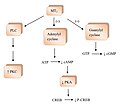 MT2 melatonin receptor signaling
 -
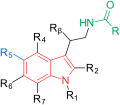 Melatonin SAR structure
 -
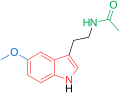 Melatonin structure
 -
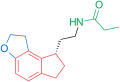 Ramelteon structure
 -
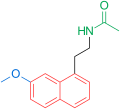 Agomelatine structure
 -
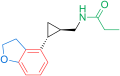 Tasimelteon structure
 -
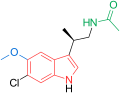 LY-156,735 structure


Sponsored Health Resource

W8MD Weight Loss, Sleep & MedSpa
Looking for physician-supervised weight loss, semaglutide, tirzepatide, or GLP-1 receptor agonist options? W8MD helps eligible patients in New York City, Brooklyn, New Jersey, Connecticut, Pennsylvania, Delaware, and greater Philadelphia with medical weight loss, sleep medicine, and long-term maintenance support.
GLP-1 specials: Affordable GLP-1 injections NYC and Philadelphia starting from $29.99/week and up for semaglutide with insurance accepted for qualifying visits, and $45/week and up for tirzepatide with insurance accepted for qualifying visits. Self-pay options start from $59.99/week and up for semaglutide and $69.99/week and up for tirzepatide.
- Medical weight loss NYC
- Affordable GLP-1 injections NYC
- Budget GLP-1 weight loss shots Philadelphia
- New Jersey medical weight loss
- NYC medical weight loss blog
- Philadelphia weight loss blog
- Sleep medicine and sleep apnea services
- W8MD MedSpa and wellness
Book a W8MD appointment · View GLP-1 specials
Paid promotional message. Eligibility, pricing, insurance coverage, medication availability, and results vary. Medical evaluation required.

Medical Disclaimer: WikiMD is for informational purposes only and is not a substitute for professional medical advice. Content may be inaccurate or outdated and should not be used for diagnosis or treatment. Always consult your healthcare provider for medical decisions. Verify information with trusted sources such as CDC.gov and NIH.gov. By using this site, you agree that WikiMD is not liable for any outcomes related to its content. See full disclaimer.
Credits:Most images are courtesy of Wikimedia commons, and templates, categories Wikipedia, licensed under CC BY SA or similar.
Translate page: - East Asian
中文,
日本,
한국어,
South Asian
हिन्दी,
தமிழ்,
తెలుగు,
Urdu,
ಕನ್ನಡ,
Southeast Asian
Indonesian,
Vietnamese,
Thai,
မြန်မာဘာသာ,
বাংলা
European
español,
Deutsch,
français,
Greek,
português do Brasil,
polski,
română,
русский,
Nederlands,
norsk,
svenska,
suomi,
Italian
Middle Eastern & African
عربى,
Turkish,
Persian,
Hebrew,
Afrikaans,
isiZulu,
Kiswahili,
Other
Bulgarian,
Hungarian,
Czech,
Swedish,
മലയാളം,
मराठी,
ਪੰਜਾਬੀ,
ગુજરાતી,
Portuguese,
Ukrainian

