Kavain
Kavain is a naturally occurring compound found in the Kava plant, specifically in the roots. It is one of the six major Kavalactones that have been identified and studied for their physiological effects. Kavain is known for its anxiolytic and analgesic properties, and is primarily responsible for the sedative effects of Kava.
Chemistry[edit]
Kavain is a member of the Kavalactones group, which are a class of lactone compounds. It is a fat-soluble molecule and is usually consumed in a traditional drink prepared from the roots of the Kava plant. The chemical structure of Kavain allows it to cross the blood-brain barrier, which is why it has psychoactive effects.
Pharmacology[edit]
The pharmacological effects of Kavain are primarily due to its interaction with the GABA (gamma-aminobutyric acid) receptors in the brain. It is believed to bind to the GABA receptors, thereby inhibiting the reuptake of noradrenaline at the synapses. This results in a decrease in neuronal activity, leading to sedation, muscle relaxation, and anxiolytic effects.
Medical Uses[edit]
Kavain is used in traditional medicine for its sedative and anxiolytic effects. It is also used to treat insomnia, stress, and anxiety disorders. However, the use of Kavain and other Kavalactones is associated with a risk of hepatotoxicity, which can lead to liver damage.
Safety and Side Effects[edit]
While Kavain is generally considered safe when used in moderation, excessive consumption can lead to a number of side effects. These include nausea, dizziness, and a skin condition known as Kava Dermopathy. There is also a risk of hepatotoxicity, especially in individuals with pre-existing liver conditions or those who consume alcohol while taking Kavain.
See Also[edit]

This WikiMD article can only be edited by registered and verified editors. You can log in or register.
Kavain[edit]
-
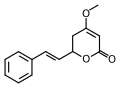 Kavain structure
 -
 Kavain 3D model


Medical Disclaimer: WikiMD is for informational purposes only and is not a substitute for professional medical advice. Content may be inaccurate or outdated and should not be used for diagnosis or treatment. Always consult your healthcare provider for medical decisions. Verify information with trusted sources such as CDC.gov and NIH.gov. By using this site, you agree that WikiMD is not liable for any outcomes related to its content. See full disclaimer.
Credits:Most images are courtesy of Wikimedia commons, and templates, categories Wikipedia, licensed under CC BY SA or similar.
Translate page: - East Asian
中文,
日本,
한국어,
South Asian
हिन्दी,
தமிழ்,
తెలుగు,
Urdu,
ಕನ್ನಡ,
Southeast Asian
Indonesian,
Vietnamese,
Thai,
မြန်မာဘာသာ,
বাংলা
European
español,
Deutsch,
français,
Greek,
português do Brasil,
polski,
română,
русский,
Nederlands,
norsk,
svenska,
suomi,
Italian
Middle Eastern & African
عربى,
Turkish,
Persian,
Hebrew,
Afrikaans,
isiZulu,
Kiswahili,
Other
Bulgarian,
Hungarian,
Czech,
Swedish,
മലയാളം,
मराठी,
ਪੰਜਾਬੀ,
ગુજરાતી,
Portuguese,
Ukrainian

