MicroRNA
MicroRNA (miRNA) are a class of small non-coding RNA molecules, functioning in RNA silencing and post-transcriptional regulation of gene expression. miRNAs are approximately 22 nucleotides long and are involved in many biological processes, including development, differentiation, growth, and metabolism.
History[edit]
The first miRNA, lin-4, was discovered in 1993 in a study of developmental timing in Caenorhabditis elegans. The term "microRNA" was introduced in 2001.
Biogenesis[edit]
miRNA genes are transcribed by RNA polymerase II into primary miRNA (pri-miRNA) molecules, which are then processed by the Drosha enzyme to produce precursor miRNA (pre-miRNA). The pre-miRNA is exported from the nucleus and further processed by the Dicer enzyme to produce the mature miRNA.
Function[edit]
miRNAs function by base-pairing with complementary sequences within mRNA molecules, leading to gene silencing either through translational repression or target degradation.
Role in disease[edit]
Alterations in miRNA expression are implicated in numerous disease states, including cancer, cardiovascular disease, and neurological disease.
See also[edit]
References[edit]

This WikiMD article can only be edited by registered and verified editors. You can log in or register.
MicroRNA[edit]
-
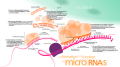 MiRNA
MiRNA -
Examples of microRNA stem-loops
-
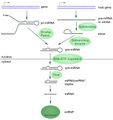 MiRNA biogenesis
 -
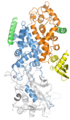 5b16 drosha dgcr8
 -
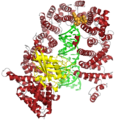 3a6p xpo5 ran miRNA
 -
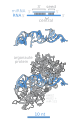 MicroRNAs and Argonaute RNA binding
 -
MiRNA mechanisms
-
Role of miRNA in a cancer cell


Medical Disclaimer: WikiMD is for informational purposes only and is not a substitute for professional medical advice. Content may be inaccurate or outdated and should not be used for diagnosis or treatment. Always consult your healthcare provider for medical decisions. Verify information with trusted sources such as CDC.gov and NIH.gov. By using this site, you agree that WikiMD is not liable for any outcomes related to its content. See full disclaimer.
Credits:Most images are courtesy of Wikimedia commons, and templates, categories Wikipedia, licensed under CC BY SA or similar.
Translate page: - East Asian
中文,
日本,
한국어,
South Asian
हिन्दी,
தமிழ்,
తెలుగు,
Urdu,
ಕನ್ನಡ,
Southeast Asian
Indonesian,
Vietnamese,
Thai,
မြန်မာဘာသာ,
বাংলা
European
español,
Deutsch,
français,
Greek,
português do Brasil,
polski,
română,
русский,
Nederlands,
norsk,
svenska,
suomi,
Italian
Middle Eastern & African
عربى,
Turkish,
Persian,
Hebrew,
Afrikaans,
isiZulu,
Kiswahili,
Other
Bulgarian,
Hungarian,
Czech,
Swedish,
മലയാളം,
मराठी,
ਪੰਜਾਬੀ,
ગુજરાતી,
Portuguese,
Ukrainian


