Mount Everest
Mount Everest is the Earth's highest mountain above sea level, located in the Mahalangur Himal sub-range of the Himalayas. The China–Nepal border runs across its summit point. Its elevation of 8,848.86 m (29,031.7 ft) was most recently established in 2020 by the Nepal and China.
Location and height[edit]
Mount Everest attracts many climbers, some of them highly experienced mountaineers. There are two main climbing routes, one approaching the summit from the southeast in Nepal (known as the "standard route") and the other from the north in Tibet. While not posing substantial technical climbing challenges on the standard route, Everest presents dangers such as altitude sickness, weather, and wind, as well as significant hazards from avalanches and the Khumbu Icefall.
Name[edit]
In 1865, Everest was given its official English name by the Royal Geographical Society, upon a recommendation by Andrew Waugh, the British Surveyor General of India. As there appeared to be several different local names, Waugh chose to name the mountain after his predecessor in the post, Sir George Everest, despite George Everest's objections.
Climbing history[edit]
Mount Everest has a long and storied history of climbing attempts and successes, with the first confirmed successful ascent by Tenzing Norgay and Edmund Hillary in 1953. Since then, many climbers from around the world have attempted to reach the summit, with varying degrees of success.
Environmental issues[edit]
Climbing Mount Everest can have a significant environmental impact. Issues such as waste left by climbers, degradation of the mountain's glaciers due to global warming, and the impact on the local wildlife and vegetation are all concerns.
See also[edit]
- List of Mount Everest summiters by number of times to the summit
- List of deaths on eight-thousanders
- Timeline of climbing Mount Everest
- Tourism in Nepal
References[edit]
External links[edit]
- MountEverest.net Commercial site with news and expedition dispatches
- EverestHistory.com The History of Mt. Everest expeditions
- EverestNews.com Current news and expeditions

This WikiMD article can only be edited by registered and verified editors. You can log in or register.
-
 Everest North Face toward Base Camp Tibet Luca Galuzzi 2006
 -
Mount Everest morning
-
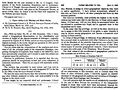 "Papers relating to the Himalaya and Mount Everest" in Proceedings of the Royal Geographical Society of London, Vol. I (1857), p. 346
 -
Gaurisankar 1890
-
Mount Everest Relief
-
Tibetan Plateau and Mount Everest
-
CH-NP 79-80 Bdy Map50
-
ISS004E8852 everest
-
Everest 3D Map Type EN
-
Everest from Kalar Patar crop
-
Yak at third lake in Gokyo

,_p._346.jpg)
Sponsored Health Resource

W8MD Weight Loss, Sleep & MedSpa
Looking for physician-supervised weight loss, semaglutide, tirzepatide, or GLP-1 receptor agonist options? W8MD helps eligible patients in New York City, Brooklyn, New Jersey, Connecticut, Pennsylvania, Delaware, and greater Philadelphia with medical weight loss, sleep medicine, and long-term maintenance support.
GLP-1 specials: Affordable GLP-1 injections NYC and Philadelphia starting from $29.99/week and up for semaglutide with insurance accepted for qualifying visits, and $45/week and up for tirzepatide with insurance accepted for qualifying visits. Self-pay options start from $59.99/week and up for semaglutide and $69.99/week and up for tirzepatide.
- Medical weight loss NYC
- Affordable GLP-1 injections NYC
- Budget GLP-1 weight loss shots Philadelphia
- New Jersey medical weight loss
- NYC medical weight loss blog
- Philadelphia weight loss blog
- Sleep medicine and sleep apnea services
- W8MD MedSpa and wellness
Book a W8MD appointment · View GLP-1 specials
Paid promotional message. Eligibility, pricing, insurance coverage, medication availability, and results vary. Medical evaluation required.

Medical Disclaimer: WikiMD is for informational purposes only and is not a substitute for professional medical advice. Content may be inaccurate or outdated and should not be used for diagnosis or treatment. Always consult your healthcare provider for medical decisions. Verify information with trusted sources such as CDC.gov and NIH.gov. By using this site, you agree that WikiMD is not liable for any outcomes related to its content. See full disclaimer.
Credits:Most images are courtesy of Wikimedia commons, and templates, categories Wikipedia, licensed under CC BY SA or similar.
Translate page: - East Asian
中文,
日本,
한국어,
South Asian
हिन्दी,
தமிழ்,
తెలుగు,
Urdu,
ಕನ್ನಡ,
Southeast Asian
Indonesian,
Vietnamese,
Thai,
မြန်မာဘာသာ,
বাংলা
European
español,
Deutsch,
français,
Greek,
português do Brasil,
polski,
română,
русский,
Nederlands,
norsk,
svenska,
suomi,
Italian
Middle Eastern & African
عربى,
Turkish,
Persian,
Hebrew,
Afrikaans,
isiZulu,
Kiswahili,
Other
Bulgarian,
Hungarian,
Czech,
Swedish,
മലയാളം,
मराठी,
ਪੰਜਾਬੀ,
ગુજરાતી,
Portuguese,
Ukrainian


