Snorkeling
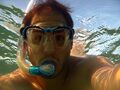
Snorkeling is a popular recreational activity, particularly at tropical resort locations. The primary appeal is the opportunity to observe underwater life in a natural setting without the complicated equipment and training required for scuba diving. It appeals to all ages because of how little effort there is, and without the exhaled bubbles of scuba-diving equipment. It is the basis of the two surface disciplines of the underwater sport of finswimming.
History[edit]
Snorkeling is mentioned by Aristotle in his Parts of Animals. He refers to divers using "instruments for respiration" resembling the elephant's trunk. The snorkel may be a tube used to breathe air from above the water surface when the wearer's mouth and nose are submerged.
Equipment[edit]
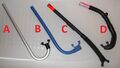
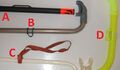
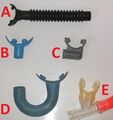
The basic snorkeling equipment includes a mask, snorkel, and fins. A wetsuit is also often used in cooler waters. The snorkel is a J-shaped tube that is open at the top and has a mouthpiece at the bottom. It allows the snorkeler to breathe while their face is underwater.
Techniques[edit]
Snorkeling is possible in almost any body of water, but snorkelers are most likely to be found in locations where there are minimal waves, warm water, and something particularly interesting to see near the surface.
Safety[edit]
While snorkeling is generally a safe activity, it can present some dangers. These include drowning, sunburn, marine life injuries, and dehydration. It is recommended that snorkelers not snorkel alone, but with a buddy or a group.
Environmental impact[edit]
Snorkeling has a smaller environmental impact than scuba diving, but can still cause damage to the environment. This includes damage to coral reefs from fins, as well as littering and pollution from snorkeling equipment.
See also[edit]

This WikiMD article can only be edited by registered and verified editors. You can log in or register.
-
Snorkeling
-
 Snorkeling
 -
 Snorkeling
 -
 Snorkeling
 -
 Snorkeling
 -
Snorkeling
-
Snorkeling
-
 Snorkeling
 -
Snorkeling
-
Snorkeling
-
Snorkeling
-
Snorkeling


Sponsored Health Resource

W8MD Weight Loss, Sleep & MedSpa
Looking for physician-supervised weight loss, semaglutide, tirzepatide, or GLP-1 receptor agonist options? W8MD helps eligible patients in New York City, Brooklyn, New Jersey, Connecticut, Pennsylvania, Delaware, and greater Philadelphia with medical weight loss, sleep medicine, and long-term maintenance support.
GLP-1 specials: Affordable GLP-1 injections NYC and Philadelphia starting from $29.99/week and up for semaglutide with insurance accepted for qualifying visits, and $45/week and up for tirzepatide with insurance accepted for qualifying visits. Self-pay options start from $59.99/week and up for semaglutide and $69.99/week and up for tirzepatide.
Medical weight loss NYC | Affordable GLP-1 injections NYC | Budget GLP-1 weight loss shots Philadelphia | New Jersey medical weight loss | NYC medical weight loss | Philadelphia medical weight loss | Sleep clinic NYC | W8MD's Philadelphia GLP-1 doctor | Weight loss prescriptions NYC
Book a W8MD appointment · View GLP-1 specials
Paid promotional message. Eligibility, pricing, insurance coverage, medication availability, and results vary. Medical evaluation required.

Medical Disclaimer: WikiMD is for informational purposes only and is not a substitute for professional medical advice. Content may be inaccurate or outdated and should not be used for diagnosis or treatment. Always consult your healthcare provider for medical decisions. Verify information with trusted sources such as CDC.gov and NIH.gov. By using this site, you agree that WikiMD is not liable for any outcomes related to its content. See full disclaimer.
Credits:Most images are courtesy of Wikimedia commons, and templates, categories Wikipedia, licensed under CC BY SA or similar.
Translate page: - East Asian
中文,
日本,
한국어,
South Asian
हिन्दी,
தமிழ்,
తెలుగు,
Urdu,
ಕನ್ನಡ,
Southeast Asian
Indonesian,
Vietnamese,
Thai,
မြန်မာဘာသာ,
বাংলা
European
español,
Deutsch,
français,
Greek,
português do Brasil,
polski,
română,
русский,
Nederlands,
norsk,
svenska,
suomi,
Italian
Middle Eastern & African
عربى,
Turkish,
Persian,
Hebrew,
Afrikaans,
isiZulu,
Kiswahili,
Other
Bulgarian,
Hungarian,
Czech,
Swedish,
മലയാളം,
मराठी,
ਪੰਜਾਬੀ,
ગુજરાતી,
Portuguese,
Ukrainian


