Betacoronavirus
Betacoronavirus is a genus of coronavirus which is part of the subfamily Orthocoronavirinae in the family Coronaviridae. They are enveloped, positive-sense, single-stranded RNA viruses. Betacoronaviruses are known to cause diseases in mammals, including humans.
Overview[edit]
The name "Betacoronavirus" derives from the Greek letter beta (β). It is one of four genera (Alpha-, Beta-, Gamma-, and Deltacoronavirus) in the subfamily Orthocoronavirinae. Betacoronaviruses are further divided into five subgenera or lineages.
Diseases[edit]
Betacoronaviruses can cause severe diseases in humans such as Severe Acute Respiratory Syndrome (SARS) and Middle East Respiratory Syndrome (MERS). The COVID-19 pandemic, which started in 2019, is caused by a betacoronavirus named SARS-CoV-2.
Transmission[edit]
Betacoronaviruses are zoonotic, meaning they are transmitted between animals and people. Detailed investigations have found that SARS-CoV was transmitted from civet cats to humans and MERS-CoV from dromedary camels to humans. Several known coronaviruses are circulating in animals that have not yet infected humans.
Prevention and Treatment[edit]
As of now, there are no specific treatments for illnesses caused by human coronaviruses. Most people with common human coronavirus illness will recover on their own. However, to relieve symptoms, people can:
- Take pain and fever medications
- Drink plenty of liquids
- Stay home and rest
See Also[edit]
- Coronavirus
- Severe Acute Respiratory Syndrome (SARS)
- Middle East Respiratory Syndrome (MERS)
- COVID-19
- SARS-CoV-2
References[edit]

This WikiMD article can only be edited by registered and verified editors. You can log in or register.
[edit]
-
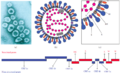 Betacoronavirus
 -
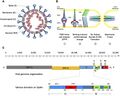 Betacoronavirus
 -
Betacoronavirus
-
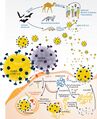 Betacoronavirus
 -
Betacoronavirus


Sponsored Health Resource

W8MD Weight Loss, Sleep & MedSpa
Looking for physician-supervised weight loss, semaglutide, tirzepatide, or GLP-1 receptor agonist options? W8MD helps eligible patients in New York City, Brooklyn, New Jersey, Connecticut, Pennsylvania, Delaware, and greater Philadelphia with medical weight loss, sleep medicine, and long-term maintenance support.
GLP-1 specials: Affordable GLP-1 injections NYC and Philadelphia starting from $29.99/week and up for semaglutide with insurance accepted for qualifying visits, and $45/week and up for tirzepatide with insurance accepted for qualifying visits. Self-pay options start from $59.99/week and up for semaglutide and $69.99/week and up for tirzepatide.
- Medical weight loss NYC
- Affordable GLP-1 injections NYC
- Budget GLP-1 weight loss shots Philadelphia
- New Jersey medical weight loss
- NYC medical weight loss blog
- Philadelphia weight loss blog
- Sleep medicine and sleep apnea services
- W8MD MedSpa and wellness
Book a W8MD appointment · View GLP-1 specials
Paid promotional message. Eligibility, pricing, insurance coverage, medication availability, and results vary. Medical evaluation required.

Medical Disclaimer: WikiMD is for informational purposes only and is not a substitute for professional medical advice. Content may be inaccurate or outdated and should not be used for diagnosis or treatment. Always consult your healthcare provider for medical decisions. Verify information with trusted sources such as CDC.gov and NIH.gov. By using this site, you agree that WikiMD is not liable for any outcomes related to its content. See full disclaimer.
Credits:Most images are courtesy of Wikimedia commons, and templates, categories Wikipedia, licensed under CC BY SA or similar.
Translate page: - East Asian
中文,
日本,
한국어,
South Asian
हिन्दी,
தமிழ்,
తెలుగు,
Urdu,
ಕನ್ನಡ,
Southeast Asian
Indonesian,
Vietnamese,
Thai,
မြန်မာဘာသာ,
বাংলা
European
español,
Deutsch,
français,
Greek,
português do Brasil,
polski,
română,
русский,
Nederlands,
norsk,
svenska,
suomi,
Italian
Middle Eastern & African
عربى,
Turkish,
Persian,
Hebrew,
Afrikaans,
isiZulu,
Kiswahili,
Other
Bulgarian,
Hungarian,
Czech,
Swedish,
മലയാളം,
मराठी,
ਪੰਜਾਬੀ,
ગુજરાતી,
Portuguese,
Ukrainian


.jpg)
