Orthornavirae
Orthornavirae is a realm of RNA viruses that includes all viruses with a positive-sense, negative-sense, or double-stranded RNA genome. This realm is part of the larger Riboviria realm, which encompasses all RNA viruses that replicate via an RNA-dependent RNA polymerase. The name "Orthornavirae" is derived from the Greek "ortho" meaning "straight" and "rna" for "ribonucleic acid," reflecting the linear nature of their RNA genomes.
Classification[edit]
Orthornavirae is divided into several phyla based on the type of RNA genome and the replication strategy:
- Kitrinoviricota: This phylum includes positive-sense single-stranded RNA viruses. Members of this phylum are known for their ability to directly translate their RNA genome into proteins upon infection of a host cell.
- Lenarviricota: This phylum consists of positive-sense single-stranded RNA viruses that infect plants and fungi. They are characterized by their unique replication mechanisms and host interactions.
- Pisuviricota: This phylum includes a diverse group of positive-sense single-stranded RNA viruses, many of which infect animals and plants. They are known for their complex life cycles and interactions with host organisms.
- Duplornaviricota: This phylum comprises double-stranded RNA viruses. These viruses have a segmented genome and are known for their ability to infect a wide range of hosts, including humans, animals, and plants.
- Negarnaviricota: This phylum includes negative-sense single-stranded RNA viruses. These viruses must first transcribe their RNA genome into a positive-sense RNA before translation can occur. They are known for causing significant diseases in humans and animals, such as influenza and rabies.
Replication[edit]
The replication of Orthornavirae viruses involves the synthesis of RNA from an RNA template, a process catalyzed by the viral RNA-dependent RNA polymerase. This enzyme is crucial for the replication cycle of these viruses, allowing them to produce new viral genomes and mRNA for protein synthesis.
Pathogenesis[edit]
Orthornavirae includes many viruses that are pathogenic to humans, animals, and plants. The mechanisms of pathogenesis vary widely among different viruses, but common strategies include evasion of the host immune response, manipulation of host cell machinery, and induction of cell death.
Evolution[edit]
The evolution of Orthornavirae is driven by high mutation rates due to the lack of proofreading mechanisms in RNA-dependent RNA polymerases. This leads to rapid genetic diversity and adaptation, allowing these viruses to quickly evolve resistance to antiviral drugs and vaccines.
Also see[edit]
Virus classification


-
 MBio.02329-18.F1.large
 -
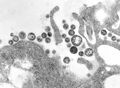 Lassa virus
 -
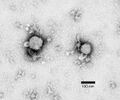 Lymphocytic choriomeningitis virus
 -
 Sin Nombre virus Hanta TEM
 -
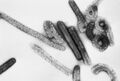 Marburg virus
 -
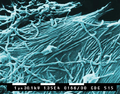 Ebola virions
 -
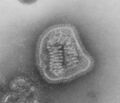 Influenza virus particle
 -
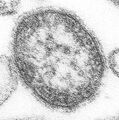 Measles virus
 -
 Mumps virus, negative stained TEM


Sponsored Health Resource

W8MD Weight Loss, Sleep & MedSpa
Looking for physician-supervised weight loss, semaglutide, tirzepatide, or GLP-1 receptor agonist options? W8MD helps eligible patients in New York City, Brooklyn, New Jersey, Connecticut, Pennsylvania, Delaware, and greater Philadelphia with medical weight loss, sleep medicine, and long-term maintenance support.
GLP-1 specials: Affordable GLP-1 injections NYC and Philadelphia starting from $29.99/week and up for semaglutide with insurance accepted for qualifying visits, and $45/week and up for tirzepatide with insurance accepted for qualifying visits. Self-pay options start from $59.99/week and up for semaglutide and $69.99/week and up for tirzepatide.
- Medical weight loss NYC
- Affordable GLP-1 injections NYC
- Budget GLP-1 weight loss shots Philadelphia
- New Jersey medical weight loss
- NYC medical weight loss blog
- Philadelphia weight loss blog
- Sleep medicine and sleep apnea services
- W8MD MedSpa and wellness
Book a W8MD appointment · View GLP-1 specials
Paid promotional message. Eligibility, pricing, insurance coverage, medication availability, and results vary. Medical evaluation required.

Medical Disclaimer: WikiMD is for informational purposes only and is not a substitute for professional medical advice. Content may be inaccurate or outdated and should not be used for diagnosis or treatment. Always consult your healthcare provider for medical decisions. Verify information with trusted sources such as CDC.gov and NIH.gov. By using this site, you agree that WikiMD is not liable for any outcomes related to its content. See full disclaimer.
Credits:Most images are courtesy of Wikimedia commons, and templates, categories Wikipedia, licensed under CC BY SA or similar.
Translate page: - East Asian
中文,
日本,
한국어,
South Asian
हिन्दी,
தமிழ்,
తెలుగు,
Urdu,
ಕನ್ನಡ,
Southeast Asian
Indonesian,
Vietnamese,
Thai,
မြန်မာဘာသာ,
বাংলা
European
español,
Deutsch,
français,
Greek,
português do Brasil,
polski,
română,
русский,
Nederlands,
norsk,
svenska,
suomi,
Italian
Middle Eastern & African
عربى,
Turkish,
Persian,
Hebrew,
Afrikaans,
isiZulu,
Kiswahili,
Other
Bulgarian,
Hungarian,
Czech,
Swedish,
മലയാളം,
मराठी,
ਪੰਜਾਬੀ,
ગુજરાતી,
Portuguese,
Ukrainian

