Chromosome 9
Chromosome 9 is one of the 23 pairs of chromosomes in humans. People normally have two copies of this chromosome. Chromosome 9 spans about 138 million base pairs (the building material of DNA) and represents between 4 and 4.5 percent of the total DNA in cells.
Structure[edit]
Identifying genes on each chromosome is an active area of genetic research. Because researchers use different approaches to genome annotation, the exact number of genes on each chromosome varies. Chromosome 9 is believed to contain around 800 to 900 genes that are involved in numerous bodily functions and development processes.
Genetic Disorders and Diseases[edit]
Several genetic disorders and diseases are linked to genes on chromosome 9. These include:
- Friedreich's ataxia: This disease is caused by a GAA trinucleotide repeat expansion in the gene FXN located on chromosome 9.
- Rett syndrome: Although primarily associated with mutations in the MECP2 gene on the X chromosome, some cases have been linked to mutations in the CDKL5 gene on chromosome 9.
- ALS (Amyotrophic Lateral Sclerosis): Some familial cases of this condition have been associated with mutations in the SOD1 gene on chromosome 9.
- Tuberous sclerosis: While most cases are linked to mutations in the TSC1 and TSC2 genes, some research suggests a possible link to chromosome 9.
Important Genes on Chromosome 9[edit]
Chromosome 9 houses several genes of note, including:
- ABO: This gene determines the ABO blood group system.
- FXN: Associated with Friedreich's ataxia.
- NOTCH1: Involved in cell differentiation processes.
- TMC1: A gene that plays a role in hearing by affecting the function of inner ear hair cells.
Research and Medicine[edit]
Research on chromosome 9 continues to reveal its complexities and the implications for health and disease. Understanding the genetic makeup of chromosome 9 can lead to advancements in gene therapy, personalized medicine, and the treatment of genetic disorders.
See Also[edit]

-
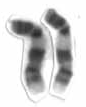 Chromosome 9 cropped
 -
 Chromosome 9
 -
 Blood bag sample
 -
 Chromosome 9 ideogram
 -
 Chromosome 9 banding patterns


Sponsored Health Resource

W8MD Weight Loss, Sleep & MedSpa
Looking for physician-supervised weight loss, semaglutide, tirzepatide, or GLP-1 receptor agonist options? W8MD helps eligible patients in New York City, Brooklyn, New Jersey, Connecticut, Pennsylvania, Delaware, and greater Philadelphia with medical weight loss, sleep medicine, and long-term maintenance support.
GLP-1 specials: Affordable GLP-1 injections NYC and Philadelphia starting from $29.99/week and up for semaglutide with insurance accepted for qualifying visits, and $45/week and up for tirzepatide with insurance accepted for qualifying visits. Self-pay options start from $59.99/week and up for semaglutide and $69.99/week and up for tirzepatide.
Medical weight loss NYC | Affordable GLP-1 injections NYC | Budget GLP-1 weight loss shots Philadelphia | New Jersey medical weight loss | NYC medical weight loss | Philadelphia medical weight loss | Sleep clinic NYC | W8MD's Philadelphia GLP-1 doctor | Weight loss prescriptions NYC
Book a W8MD appointment · View GLP-1 specials
Paid promotional message. Eligibility, pricing, insurance coverage, medication availability, and results vary. Medical evaluation required.

Medical Disclaimer: WikiMD is for informational purposes only and is not a substitute for professional medical advice. Content may be inaccurate or outdated and should not be used for diagnosis or treatment. Always consult your healthcare provider for medical decisions. Verify information with trusted sources such as CDC.gov and NIH.gov. By using this site, you agree that WikiMD is not liable for any outcomes related to its content. See full disclaimer.
Credits:Most images are courtesy of Wikimedia commons, and templates, categories Wikipedia, licensed under CC BY SA or similar.
Translate page: - East Asian
中文,
日本,
한국어,
South Asian
हिन्दी,
தமிழ்,
తెలుగు,
Urdu,
ಕನ್ನಡ,
Southeast Asian
Indonesian,
Vietnamese,
Thai,
မြန်မာဘာသာ,
বাংলা
European
español,
Deutsch,
français,
Greek,
português do Brasil,
polski,
română,
русский,
Nederlands,
norsk,
svenska,
suomi,
Italian
Middle Eastern & African
عربى,
Turkish,
Persian,
Hebrew,
Afrikaans,
isiZulu,
Kiswahili,
Other
Bulgarian,
Hungarian,
Czech,
Swedish,
മലയാളം,
मराठी,
ਪੰਜਾਬੀ,
ગુજરાતી,
Portuguese,
Ukrainian

