Emil von Behring
Emil von Behring (15 March 1854 – 31 March 1917) was a German physiologist who received the 1901 Nobel Prize in Physiology or Medicine, the first one awarded, for his discovery of a diphtheria antitoxin. He was widely known as a "saviour of children," as diphtheria used to be a major cause of child death. He was ennobled in 1901 for services to medicine.
Early life and education[edit]
Emil Adolf von Behring was born in Hansdorf, Prussia (now Poland). He was the eldest son of a schoolmaster in a large family. His education was supported by the church, and he enrolled at the Army Medical College in Berlin in 1874.
Career[edit]
After passing the examination, Behring served as a military doctor until 1889, when he became an assistant at the Institute for Infectious Diseases. Behring and Shibasaburo Kitasato jointly discovered in 1890 a therapy for diphtheria and tetanus. He went on to develop an antitoxin for diphtheria, which he called "T-antitoxin", following a successful demonstration of its effectiveness in animals and humans.
Legacy[edit]
Behring's name is widely known in connection with the Behring's law of immunity and the Behring's test for the detection of diphtheria antitoxin. His work on diphtheria antitoxin is considered a milestone in the history of medicine and immunology.
See also[edit]
References[edit]
External links[edit]
- Emil von Behring - Facts on NobelPrize.org

This WikiMD article can only be edited by registered and verified editors. You can log in or register.
-
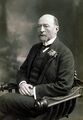 Emil von Behring sitting
 -
 Behring-Route in Marburg
 -
 Villa Behring on Capri
 -
 Behring Mausoleum

_-_Wannkopfstra%C3%9Fe_(1).jpg)

.jpg)
Sponsored Health Resource

W8MD Weight Loss, Sleep & MedSpa
Looking for physician-supervised weight loss, semaglutide, tirzepatide, or GLP-1 receptor agonist options? W8MD helps eligible patients in New York City, Brooklyn, New Jersey, Connecticut, Pennsylvania, Delaware, and greater Philadelphia with medical weight loss, sleep medicine, and long-term maintenance support.
GLP-1 specials: Affordable GLP-1 injections NYC and Philadelphia starting from $29.99/week and up for semaglutide with insurance accepted for qualifying visits, and $45/week and up for tirzepatide with insurance accepted for qualifying visits. Self-pay options start from $59.99/week and up for semaglutide and $69.99/week and up for tirzepatide.
Medical weight loss NYC | Affordable GLP-1 injections NYC | Budget GLP-1 weight loss shots Philadelphia | New Jersey medical weight loss | NYC medical weight loss | Philadelphia medical weight loss | Sleep clinic NYC | W8MD's Philadelphia GLP-1 doctor | Weight loss prescriptions NYC
Book a W8MD appointment · View GLP-1 specials
Paid promotional message. Eligibility, pricing, insurance coverage, medication availability, and results vary. Medical evaluation required.

Medical Disclaimer: WikiMD is for informational purposes only and is not a substitute for professional medical advice. Content may be inaccurate or outdated and should not be used for diagnosis or treatment. Always consult your healthcare provider for medical decisions. Verify information with trusted sources such as CDC.gov and NIH.gov. By using this site, you agree that WikiMD is not liable for any outcomes related to its content. See full disclaimer.
Credits:Most images are courtesy of Wikimedia commons, and templates, categories Wikipedia, licensed under CC BY SA or similar.
Translate page: - East Asian
中文,
日本,
한국어,
South Asian
हिन्दी,
தமிழ்,
తెలుగు,
Urdu,
ಕನ್ನಡ,
Southeast Asian
Indonesian,
Vietnamese,
Thai,
မြန်မာဘာသာ,
বাংলা
European
español,
Deutsch,
français,
Greek,
português do Brasil,
polski,
română,
русский,
Nederlands,
norsk,
svenska,
suomi,
Italian
Middle Eastern & African
عربى,
Turkish,
Persian,
Hebrew,
Afrikaans,
isiZulu,
Kiswahili,
Other
Bulgarian,
Hungarian,
Czech,
Swedish,
മലയാളം,
मराठी,
ਪੰਜਾਬੀ,
ગુજરાતી,
Portuguese,
Ukrainian

