Filter paper
Filter paper is a semi-permeable paper barrier placed perpendicular to a liquid or air flow. It is used to separate fine substances from liquids or air.
Overview[edit]
Filter paper comes in various porosities and grades depending on the applications it is meant for. The important parameters are wet strength, porosity, particle retention, flow rate, compatibility, efficiency and capacity.
Types of Filter Paper[edit]
There are two main types of filter paper: qualitative and quantitative.
Qualitative Filter Paper[edit]
Qualitative filter paper is used in qualitative analytical techniques to determine and identify materials. It is made of cellulose and is not intended for use in quantitative analysis.
Quantitative Filter Paper[edit]
Quantitative filter paper, also known as ashless filter paper, is made of refined pulp and cotton linters that have been acid washed to remove any impurities. It is used for quantitative and gravimetric analysis.
Applications[edit]
Filter paper is used in a variety of applications including, Chemistry, Biology, Pharmaceuticals, Food and Beverage, Environmental Testing, and Air Pollution Monitoring.
See Also[edit]
References[edit]

This WikiMD article can only be edited by registered and verified editors. You can log in or register.
-
Round filter paper
-
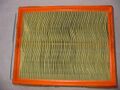 Air filter from Opel Astra
 -
Cutaway view of an engine oil filter
-
Filter paper
-
Whatman filter paper
-
Chromatography paper
.JPG)

Medical Disclaimer: WikiMD is for informational purposes only and is not a substitute for professional medical advice. Content may be inaccurate or outdated and should not be used for diagnosis or treatment. Always consult your healthcare provider for medical decisions. Verify information with trusted sources such as CDC.gov and NIH.gov. By using this site, you agree that WikiMD is not liable for any outcomes related to its content. See full disclaimer.
Credits:Most images are courtesy of Wikimedia commons, and templates, categories Wikipedia, licensed under CC BY SA or similar.
Translate page: - East Asian
中文,
日本,
한국어,
South Asian
हिन्दी,
தமிழ்,
తెలుగు,
Urdu,
ಕನ್ನಡ,
Southeast Asian
Indonesian,
Vietnamese,
Thai,
မြန်မာဘာသာ,
বাংলা
European
español,
Deutsch,
français,
Greek,
português do Brasil,
polski,
română,
русский,
Nederlands,
norsk,
svenska,
suomi,
Italian
Middle Eastern & African
عربى,
Turkish,
Persian,
Hebrew,
Afrikaans,
isiZulu,
Kiswahili,
Other
Bulgarian,
Hungarian,
Czech,
Swedish,
മലയാളം,
मराठी,
ਪੰਜਾਬੀ,
ગુજરાતી,
Portuguese,
Ukrainian


