Furazolidone
An article about the use of Furazolidone in medicine
| Furazolidone | |
|---|---|
|
|

Furazolidone is an antimicrobial agent that has been used in the treatment of bacterial and protozoal infections. It belongs to the class of nitrofuran antibiotics and has been used in both human and veterinary medicine.
Mechanism of Action[edit]
Furazolidone works by interfering with the DNA of bacteria and protozoa, inhibiting their ability to reproduce and repair themselves. This action is primarily bacteriostatic, meaning it stops bacteria from multiplying, but it can also be bactericidal at higher concentrations.
Medical Uses[edit]
Furazolidone has been used to treat a variety of infections, including:
- Giardiasis
- Cholera
- Bacterial diarrhea
- Helicobacter pylori infections
It is particularly effective against infections caused by Gram-negative bacteria and some protozoa.
Side Effects[edit]
Common side effects of furazolidone include:
- Nausea
- Vomiting
- Diarrhea
- Abdominal pain
Rare but serious side effects can include:
Contraindications[edit]
Furazolidone should not be used in individuals with known hypersensitivity to nitrofuran derivatives. It is also contraindicated in patients with glucose-6-phosphate dehydrogenase deficiency due to the risk of hemolytic anemia.
Drug Interactions[edit]
Furazolidone can interact with other medications, including:
These interactions can lead to increased blood pressure and other cardiovascular effects.
Regulatory Status[edit]
Furazolidone has been withdrawn from the market in many countries due to concerns about its safety profile and the availability of safer alternatives. However, it may still be used in some regions under specific circumstances.
Also see[edit]
References[edit]
-
 Furazolidone
 -
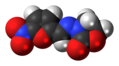 Furazolidone 3D Spacefill

Sponsored Health Resource

W8MD Weight Loss, Sleep & MedSpa
Looking for physician-supervised weight loss, semaglutide, tirzepatide, or GLP-1 receptor agonist options? W8MD helps eligible patients in New York City, Brooklyn, New Jersey, Connecticut, Pennsylvania, Delaware, and greater Philadelphia with medical weight loss, sleep medicine, and long-term maintenance support.
GLP-1 specials: Affordable GLP-1 injections NYC and Philadelphia starting from $29.99/week and up for semaglutide with insurance accepted for qualifying visits, and $45/week and up for tirzepatide with insurance accepted for qualifying visits. Self-pay options start from $59.99/week and up for semaglutide and $69.99/week and up for tirzepatide.
- Medical weight loss NYC
- Affordable GLP-1 injections NYC
- Budget GLP-1 weight loss shots Philadelphia
- New Jersey medical weight loss
- NYC medical weight loss blog
- Philadelphia weight loss blog
- Sleep medicine and sleep apnea services
- W8MD MedSpa and wellness
Book a W8MD appointment · View GLP-1 specials
Paid promotional message. Eligibility, pricing, insurance coverage, medication availability, and results vary. Medical evaluation required.

Medical Disclaimer: WikiMD is for informational purposes only and is not a substitute for professional medical advice. Content may be inaccurate or outdated and should not be used for diagnosis or treatment. Always consult your healthcare provider for medical decisions. Verify information with trusted sources such as CDC.gov and NIH.gov. By using this site, you agree that WikiMD is not liable for any outcomes related to its content. See full disclaimer.
Credits:Most images are courtesy of Wikimedia commons, and templates, categories Wikipedia, licensed under CC BY SA or similar.
Translate page: - East Asian
中文,
日本,
한국어,
South Asian
हिन्दी,
தமிழ்,
తెలుగు,
Urdu,
ಕನ್ನಡ,
Southeast Asian
Indonesian,
Vietnamese,
Thai,
မြန်မာဘာသာ,
বাংলা
European
español,
Deutsch,
français,
Greek,
português do Brasil,
polski,
română,
русский,
Nederlands,
norsk,
svenska,
suomi,
Italian
Middle Eastern & African
عربى,
Turkish,
Persian,
Hebrew,
Afrikaans,
isiZulu,
Kiswahili,
Other
Bulgarian,
Hungarian,
Czech,
Swedish,
മലയാളം,
मराठी,
ਪੰਜਾਬੀ,
ગુજરાતી,
Portuguese,
Ukrainian

