Homeostasis
Homeostasis refers to the dynamic process by which living organisms maintain a stable internal environment despite changes in external conditions. The term is derived from the Greek words "homeo," meaning "similar," and "stasis," meaning "standstill." In physiology, homeostasis involves a multitude of complex biological mechanisms that operate, often via the autonomic nervous system, to counterbalance changes that could disrupt normal function.
Mechanisms of Homeostasis[edit]
The body maintains homeostasis through a series of interconnected systems that monitor and adjust various physiological parameters. These systems involve feedback mechanisms that work to maintain a range of conditions within certain boundaries. Feedback mechanisms can be either negative, which work to reverse the direction of a change, or positive, which amplify changes.
Components of Homeostasis[edit]
Various bodily systems contribute to the maintenance of homeostasis. These include:
Thermoregulation: The body maintains a relatively constant temperature through mechanisms such as sweating, shivering, and changes in blood flow.
Osmoregulation: This involves the regulation of the body's water and mineral salt concentrations.
Blood glucose regulation: The body must maintain blood glucose levels within a narrow range. This is primarily achieved through the actions of insulin and glucagon.
Oxygen and Carbon Dioxide regulation: The body maintains a stable level of oxygen and carbon dioxide in the blood. This is achieved through the process of respiration.
pH regulation: The body maintains the pH of blood and other bodily fluids within a narrow range, primarily through the action of the kidneys and lungs.
Importance of Homeostasis[edit]
Homeostasis is essential for survival and functioning of the organism. Disruption of homeostatic processes can lead to disease or death.
Clinical Relevance[edit]
Understanding homeostasis is crucial in medicine as it underpins many diseases and their treatment. In many pathological conditions, the normal homeostatic processes are disrupted leading to a state of imbalance.
See Also[edit]

This WikiMD article can only be edited by registered and verified editors. You can log in or register.
-
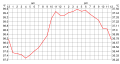 Body temperature variation
 -
 Small huddle
 -
 Negative feedback mechanism
 -
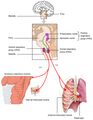 Respiratory centers of the brain
 -
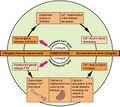 Calcium homeostasis
 -
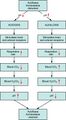 Respiratory regulation of blood


Medical Disclaimer: WikiMD is for informational purposes only and is not a substitute for professional medical advice. Content may be inaccurate or outdated and should not be used for diagnosis or treatment. Always consult your healthcare provider for medical decisions. Verify information with trusted sources such as CDC.gov and NIH.gov. By using this site, you agree that WikiMD is not liable for any outcomes related to its content. See full disclaimer.
Credits:Most images are courtesy of Wikimedia commons, and templates, categories Wikipedia, licensed under CC BY SA or similar.
Translate page: - East Asian
中文,
日本,
한국어,
South Asian
हिन्दी,
தமிழ்,
తెలుగు,
Urdu,
ಕನ್ನಡ,
Southeast Asian
Indonesian,
Vietnamese,
Thai,
မြန်မာဘာသာ,
বাংলা
European
español,
Deutsch,
français,
Greek,
português do Brasil,
polski,
română,
русский,
Nederlands,
norsk,
svenska,
suomi,
Italian
Middle Eastern & African
عربى,
Turkish,
Persian,
Hebrew,
Afrikaans,
isiZulu,
Kiswahili,
Other
Bulgarian,
Hungarian,
Czech,
Swedish,
മലയാളം,
मराठी,
ਪੰਜਾਬੀ,
ગુજરાતી,
Portuguese,
Ukrainian

