Liston knife
Liston Knife is a type of surgical instrument used primarily in the field of medicine and surgery. Named after the Scottish surgeon, Robert Liston, the Liston Knife is known for its distinctive shape and sharpness, making it an essential tool in various surgical procedures.
History[edit]
The Liston Knife was named after Robert Liston, a notable Scottish surgeon in the 19th century. Liston was known for his speed and skill in the operating room, often using his eponymous knife during surgeries. The Liston Knife was a significant advancement in surgical tools during its time, as it allowed for more precise and efficient operations.
Design[edit]
The Liston Knife typically features a long, straight, and narrow blade that is exceptionally sharp. This design allows for precise cuts and incisions, making it a valuable tool in many surgical procedures. The handle of the Liston Knife is usually made of a durable material such as stainless steel or plastic, providing a firm grip for the surgeon.
Uses[edit]
The primary use of the Liston Knife is in surgical procedures. It is particularly useful in making long, straight incisions, such as those needed in amputations. The sharpness and precision of the Liston Knife also make it suitable for more delicate operations, such as those involving the nervous system or cardiovascular system.
See Also[edit]
References[edit]

This WikiMD article can only be edited by registered and verified editors. You can log in or register.
-
 Liston knife
 -
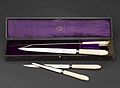 Liston knife


Medical Disclaimer: WikiMD is for informational purposes only and is not a substitute for professional medical advice. Content may be inaccurate or outdated and should not be used for diagnosis or treatment. Always consult your healthcare provider for medical decisions. Verify information with trusted sources such as CDC.gov and NIH.gov. By using this site, you agree that WikiMD is not liable for any outcomes related to its content. See full disclaimer.
Credits:Most images are courtesy of Wikimedia commons, and templates, categories Wikipedia, licensed under CC BY SA or similar.
Translate page: - East Asian
中文,
日本,
한국어,
South Asian
हिन्दी,
தமிழ்,
తెలుగు,
Urdu,
ಕನ್ನಡ,
Southeast Asian
Indonesian,
Vietnamese,
Thai,
မြန်မာဘာသာ,
বাংলা
European
español,
Deutsch,
français,
Greek,
português do Brasil,
polski,
română,
русский,
Nederlands,
norsk,
svenska,
suomi,
Italian
Middle Eastern & African
عربى,
Turkish,
Persian,
Hebrew,
Afrikaans,
isiZulu,
Kiswahili,
Other
Bulgarian,
Hungarian,
Czech,
Swedish,
മലയാളം,
मराठी,
ਪੰਜਾਬੀ,
ગુજરાતી,
Portuguese,
Ukrainian

