Macrophage
Macrophage is a type of white blood cell that is part of the immune system. Macrophages are found in almost all tissues, where they patrol for potential harmful organisms and destroy them. They are one of the first lines of defense in the immune response.
Function[edit]
Macrophages have many roles in the immune system, including the removal of dead cells, the presentation of antigens, the destruction of cancer cells, and the stimulation of other immune cells. They are able to move around in tissue and reach sites of infection or damage quickly.
Types[edit]
There are several types of macrophages, including:
- Tissue macrophages which reside in specific organs (also known as fixed macrophages)
- Monocytes which circulate in the blood and can become macrophages when they enter tissues
- Dendritic cells which share many functions with macrophages but are considered a different type of cell
Role in disease[edit]
Macrophages play a role in many diseases, as they can become overactive or dysfunctional. This can lead to chronic inflammation, which is a factor in diseases such as atherosclerosis, rheumatoid arthritis, and cancer. In some cases, macrophages can be hijacked by pathogens and used to spread infection.
Research[edit]
Research into macrophages is ongoing, with a focus on understanding how they function and how they can be manipulated to treat disease. This includes research into how macrophages can be 'reprogrammed' to attack cancer cells, or to reduce inflammation in autoimmune diseases.
See also[edit]

This WikiMD article can only be edited by registered and verified editors. You can log in or register.
-
Cytology of a macrophage
-
Giemsa Stain Macrophage Illustration
-
Phagocytosis
-
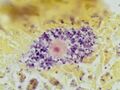 Gram stain of a macrophage with ingested S. epidermidis bacteria
 -
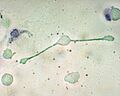 Macrophage
 -
Micrograph of a melanophage
-
J774 Cells with Conidia in Liquid Media
-
Alveolar Macrophages with Conidia in Liquid Medium


Medical Disclaimer: WikiMD is for informational purposes only and is not a substitute for professional medical advice. Content may be inaccurate or outdated and should not be used for diagnosis or treatment. Always consult your healthcare provider for medical decisions. Verify information with trusted sources such as CDC.gov and NIH.gov. By using this site, you agree that WikiMD is not liable for any outcomes related to its content. See full disclaimer.
Credits:Most images are courtesy of Wikimedia commons, and templates, categories Wikipedia, licensed under CC BY SA or similar.
Translate page: - East Asian
中文,
日本,
한국어,
South Asian
हिन्दी,
தமிழ்,
తెలుగు,
Urdu,
ಕನ್ನಡ,
Southeast Asian
Indonesian,
Vietnamese,
Thai,
မြန်မာဘာသာ,
বাংলা
European
español,
Deutsch,
français,
Greek,
português do Brasil,
polski,
română,
русский,
Nederlands,
norsk,
svenska,
suomi,
Italian
Middle Eastern & African
عربى,
Turkish,
Persian,
Hebrew,
Afrikaans,
isiZulu,
Kiswahili,
Other
Bulgarian,
Hungarian,
Czech,
Swedish,
മലയാളം,
मराठी,
ਪੰਜਾਬੀ,
ગુજરાતી,
Portuguese,
Ukrainian


