Risk assessment
Risk assessment is a systematic process of evaluating the potential risks that may be involved in a projected activity or undertaking. It is an integral part of planning and decision-making processes in various fields, including healthcare, business, and environmental science.
Definition[edit]
Risk assessment is defined as the identification and analysis of potential hazards that could negatively impact an individual's health, a business's operations, or an environment's condition. It involves the evaluation of the severity of the potential risk and the probability that the risk will occur.
Process[edit]
The process of risk assessment involves several steps:
- Identification of hazards: This involves determining what could potentially cause harm. This could be a physical object, a chemical substance, a biological agent, or a work process.
- Determination of who might be harmed and how: This involves identifying who might be affected by the hazard and how they might be harmed.
- Evaluation of risks: This involves determining the likelihood and severity of the potential harm.
- Implementation of control measures: This involves deciding on and implementing measures to eliminate or reduce the risk.
- Review of the assessment: This involves regularly reviewing the risk assessment to ensure it remains up-to-date.
Applications[edit]
Risk assessment is used in a variety of fields, including:
- Healthcare: In healthcare, risk assessment is used to identify potential health risks to patients and healthcare workers. This can include risks related to medical procedures, medication use, and infection control.
- Business: In business, risk assessment is used to identify potential risks that could impact a company's operations or financial stability. This can include risks related to market conditions, operational processes, and legal compliance.
- Environmental science: In environmental science, risk assessment is used to identify potential risks to the environment. This can include risks related to pollution, climate change, and biodiversity loss.
See also[edit]

This WikiMD article can only be edited by registered and verified editors. You can log in or register.
-
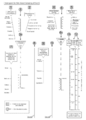 Risk Based Sampling Nomogram (3yr)
.png)
Sponsored Health Resource

W8MD Weight Loss, Sleep & MedSpa
Looking for physician-supervised weight loss, semaglutide, tirzepatide, or GLP-1 receptor agonist options? W8MD helps eligible patients in New York City, Brooklyn, New Jersey, Connecticut, Pennsylvania, Delaware, and greater Philadelphia with medical weight loss, sleep medicine, and long-term maintenance support.
GLP-1 specials: Affordable GLP-1 injections NYC and Philadelphia starting from $29.99/week and up for semaglutide with insurance accepted for qualifying visits, and $45/week and up for tirzepatide with insurance accepted for qualifying visits. Self-pay options start from $59.99/week and up for semaglutide and $69.99/week and up for tirzepatide.
- Medical weight loss NYC
- Affordable GLP-1 injections NYC
- Budget GLP-1 weight loss shots Philadelphia
- New Jersey medical weight loss
- NYC medical weight loss blog
- Philadelphia weight loss blog
- Sleep medicine and sleep apnea services
- W8MD MedSpa and wellness
Book a W8MD appointment · View GLP-1 specials
Paid promotional message. Eligibility, pricing, insurance coverage, medication availability, and results vary. Medical evaluation required.

Medical Disclaimer: WikiMD is for informational purposes only and is not a substitute for professional medical advice. Content may be inaccurate or outdated and should not be used for diagnosis or treatment. Always consult your healthcare provider for medical decisions. Verify information with trusted sources such as CDC.gov and NIH.gov. By using this site, you agree that WikiMD is not liable for any outcomes related to its content. See full disclaimer.
Credits:Most images are courtesy of Wikimedia commons, and templates, categories Wikipedia, licensed under CC BY SA or similar.
Translate page: - East Asian
中文,
日本,
한국어,
South Asian
हिन्दी,
தமிழ்,
తెలుగు,
Urdu,
ಕನ್ನಡ,
Southeast Asian
Indonesian,
Vietnamese,
Thai,
မြန်မာဘာသာ,
বাংলা
European
español,
Deutsch,
français,
Greek,
português do Brasil,
polski,
română,
русский,
Nederlands,
norsk,
svenska,
suomi,
Italian
Middle Eastern & African
عربى,
Turkish,
Persian,
Hebrew,
Afrikaans,
isiZulu,
Kiswahili,
Other
Bulgarian,
Hungarian,
Czech,
Swedish,
മലയാളം,
मराठी,
ਪੰਜਾਬੀ,
ગુજરાતી,
Portuguese,
Ukrainian

