Tobacco control
Tobacco control refers to the strategies, policies, and practices aimed at limiting the production, marketing, and consumption of tobacco products to protect public health and reduce tobacco-related diseases and deaths.
History[edit]
The history of tobacco control can be traced back to the 16th century when the harmful effects of tobacco use were first recognized. However, it was not until the 20th century that comprehensive tobacco control measures were implemented, primarily in response to the growing body of scientific evidence linking tobacco use to a range of serious health problems.
Strategies[edit]
Tobacco control strategies include:
- Legislation and regulation: This includes laws and regulations aimed at restricting the production, sale, and marketing of tobacco products. Examples include bans on advertising, promotion and sponsorship, restrictions on smoking in public places, and regulations on the packaging and labeling of tobacco products.
- Taxation and pricing: Increasing the price of tobacco products through taxation is one of the most effective ways to reduce tobacco use, particularly among young people and low-income populations.
- Public education and awareness campaigns: These aim to inform the public about the dangers of tobacco use and secondhand smoke exposure, and to promote the benefits of quitting.
- Cessation support services: These include services and resources to help tobacco users quit, such as quitlines, nicotine replacement therapies, and counseling services.
Challenges[edit]
Despite the progress made in tobacco control, several challenges remain. These include the tobacco industry's aggressive marketing tactics, the high level of addiction to nicotine, and the lack of access to cessation support services in many parts of the world.
See also[edit]
References[edit]

This WikiMD article can only be edited by registered and verified editors. You can log in or register.
Tobacco control[edit]
-
 Anti Tobacco Movement Jakarta
 -
 WHO Framework Convention on Tobacco Control
 -
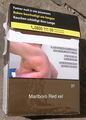 Belgian cigarette pack (generic)
 -
 One of the No Smoking warning signs in a small community park in Taipei


.jpg)

Sponsored Health Resource

W8MD Weight Loss, Sleep & MedSpa
Looking for physician-supervised weight loss, semaglutide, tirzepatide, or GLP-1 receptor agonist options? W8MD helps eligible patients in New York City, Brooklyn, New Jersey, Connecticut, Pennsylvania, Delaware, and greater Philadelphia with medical weight loss, sleep medicine, and long-term maintenance support.
GLP-1 specials: Affordable GLP-1 injections NYC and Philadelphia starting from $29.99/week and up for semaglutide with insurance accepted for qualifying visits, and $45/week and up for tirzepatide with insurance accepted for qualifying visits. Self-pay options start from $59.99/week and up for semaglutide and $69.99/week and up for tirzepatide.
- Medical weight loss NYC
- Affordable GLP-1 injections NYC
- Budget GLP-1 weight loss shots Philadelphia
- New Jersey medical weight loss
- NYC medical weight loss blog
- Philadelphia weight loss blog
- Sleep medicine and sleep apnea services
- W8MD MedSpa and wellness
Book a W8MD appointment · View GLP-1 specials
Paid promotional message. Eligibility, pricing, insurance coverage, medication availability, and results vary. Medical evaluation required.

Medical Disclaimer: WikiMD is for informational purposes only and is not a substitute for professional medical advice. Content may be inaccurate or outdated and should not be used for diagnosis or treatment. Always consult your healthcare provider for medical decisions. Verify information with trusted sources such as CDC.gov and NIH.gov. By using this site, you agree that WikiMD is not liable for any outcomes related to its content. See full disclaimer.
Credits:Most images are courtesy of Wikimedia commons, and templates, categories Wikipedia, licensed under CC BY SA or similar.
Translate page: - East Asian
中文,
日本,
한국어,
South Asian
हिन्दी,
தமிழ்,
తెలుగు,
Urdu,
ಕನ್ನಡ,
Southeast Asian
Indonesian,
Vietnamese,
Thai,
မြန်မာဘာသာ,
বাংলা
European
español,
Deutsch,
français,
Greek,
português do Brasil,
polski,
română,
русский,
Nederlands,
norsk,
svenska,
suomi,
Italian
Middle Eastern & African
عربى,
Turkish,
Persian,
Hebrew,
Afrikaans,
isiZulu,
Kiswahili,
Other
Bulgarian,
Hungarian,
Czech,
Swedish,
മലയാളം,
मराठी,
ਪੰਜਾਬੀ,
ગુજરાતી,
Portuguese,
Ukrainian

