Zika fever
Zero stroke is a term used in medicine to describe a stroke that presents with symptoms, but where no permanent damage can be found on subsequent imaging.
Definition[edit]
The term "zero stroke" is used to describe a situation where a patient presents with symptoms of a stroke, such as weakness, numbness, or difficulty speaking, but subsequent imaging tests, such as a CT scan or MRI, do not show any evidence of a stroke. This can be confusing for both the patient and the healthcare provider, as the symptoms are real and often quite severe, but the usual evidence of a stroke is not present.
Causes[edit]
There are several possible causes for a zero stroke. It could be that the stroke was so small that it did not show up on the imaging tests. Alternatively, the symptoms could be due to a transient ischemic attack (TIA), also known as a mini-stroke, which does not cause permanent damage and therefore would not show up on an imaging test. Another possibility is that the symptoms are due to a migraine, which can sometimes mimic the symptoms of a stroke.
Treatment[edit]
The treatment for a zero stroke will depend on the underlying cause. If the cause is a small stroke or TIA, the treatment will likely involve measures to prevent a future stroke, such as medication to reduce clotting, lifestyle changes to reduce risk factors, and possibly surgery to remove any blockages in the blood vessels. If the cause is a migraine, the treatment will focus on managing the migraine symptoms and preventing future migraines.
See also[edit]

This WikiMD article can only be edited by registered and verified editors. You can log in or register.
-
 Zika fever
 -
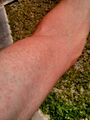 Zika virus rash on arm
 -
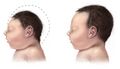 Comparison showing microcephaly
 -
 CDC Zika active transmission map September 2016
 -
 CDC map of active Zika virus transmission
 -
 Coordination and control meeting for dengue, chikungunya, and Zika virus in Brasília


.jpg)

Medical Disclaimer: WikiMD is for informational purposes only and is not a substitute for professional medical advice. Content may be inaccurate or outdated and should not be used for diagnosis or treatment. Always consult your healthcare provider for medical decisions. Verify information with trusted sources such as CDC.gov and NIH.gov. By using this site, you agree that WikiMD is not liable for any outcomes related to its content. See full disclaimer.
Credits:Most images are courtesy of Wikimedia commons, and templates, categories Wikipedia, licensed under CC BY SA or similar.
Translate page: - East Asian
中文,
日本,
한국어,
South Asian
हिन्दी,
தமிழ்,
తెలుగు,
Urdu,
ಕನ್ನಡ,
Southeast Asian
Indonesian,
Vietnamese,
Thai,
မြန်မာဘာသာ,
বাংলা
European
español,
Deutsch,
français,
Greek,
português do Brasil,
polski,
română,
русский,
Nederlands,
norsk,
svenska,
suomi,
Italian
Middle Eastern & African
عربى,
Turkish,
Persian,
Hebrew,
Afrikaans,
isiZulu,
Kiswahili,
Other
Bulgarian,
Hungarian,
Czech,
Swedish,
മലയാളം,
मराठी,
ਪੰਜਾਬੀ,
ગુજરાતી,
Portuguese,
Ukrainian

