Bozbash
Bozbash is a traditional Azerbaijani and Armenian dish, known for its rich flavors and hearty ingredients. It is a type of stew that is typically made with lamb, vegetables, and a variety of spices. The name "Bozbash" translates to "gray head" in Azerbaijani, which refers to the color of the dish when it is prepared.
Ingredients[edit]
The primary ingredient in Bozbash is lamb, which is often used in the form of large chunks or meatballs. The dish also includes a variety of vegetables such as potatoes, carrots, and onions. Other common ingredients include:
- Chickpeas
- Tomatoes
- Bell peppers
- Eggplants
- Garlic
- Herbs such as parsley and cilantro
- Spices like turmeric, saffron, and black pepper
Preparation[edit]
Bozbash is traditionally cooked in a large pot or cauldron over an open flame. The preparation involves several steps:
- 1. Meat Preparation: The lamb is cut into large pieces and browned in the pot to enhance its flavor.
- 2. Vegetable Addition: Chopped onions, carrots, and other vegetables are added to the pot and sautéed with the meat.
- 3. Spice Infusion: Spices such as turmeric and saffron are added to the mixture, giving the dish its distinctive aroma and color.
- 4. Simmering: Water or broth is added, and the stew is left to simmer for several hours until the meat is tender and the flavors are well combined.
- 5. Final Touches: Chickpeas and herbs are added towards the end of the cooking process.
Variations[edit]
Bozbash has several regional variations, each with its unique twist on the traditional recipe:
- Shorba Bozbash: A soup-like version with more broth, often served as a starter.
- Kufta Bozbash: Features large meatballs made from minced lamb mixed with rice and spices.
- Piti Bozbash: Cooked in individual clay pots, this version is popular in Nakhchivan and Armenia.
Cultural Significance[edit]
Bozbash is more than just a meal; it is a cultural symbol in Azerbaijan and Armenia. It is often served during special occasions and family gatherings. The dish represents the rich culinary heritage of the region and is a testament to the use of local ingredients and traditional cooking methods.
Gallery[edit]
-
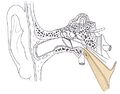 Place de la trompe d'Eustache Schema

Related Pages[edit]

Medical Disclaimer: WikiMD is for informational purposes only and is not a substitute for professional medical advice. Content may be inaccurate or outdated and should not be used for diagnosis or treatment. Always consult your healthcare provider for medical decisions. Verify information with trusted sources such as CDC.gov and NIH.gov. By using this site, you agree that WikiMD is not liable for any outcomes related to its content. See full disclaimer.
Credits:Most images are courtesy of Wikimedia commons, and templates, categories Wikipedia, licensed under CC BY SA or similar.
Translate page: - East Asian
中文,
日本,
한국어,
South Asian
हिन्दी,
தமிழ்,
తెలుగు,
Urdu,
ಕನ್ನಡ,
Southeast Asian
Indonesian,
Vietnamese,
Thai,
မြန်မာဘာသာ,
বাংলা
European
español,
Deutsch,
français,
Greek,
português do Brasil,
polski,
română,
русский,
Nederlands,
norsk,
svenska,
suomi,
Italian
Middle Eastern & African
عربى,
Turkish,
Persian,
Hebrew,
Afrikaans,
isiZulu,
Kiswahili,
Other
Bulgarian,
Hungarian,
Czech,
Swedish,
മലയാളം,
मराठी,
ਪੰਜਾਬੀ,
ગુજરાતી,
Portuguese,
Ukrainian

