Cystic fibrosis and race
Cystic fibrosis (CF) is a genetic disorder that affects mostly the lungs, but also the pancreas, liver, kidneys, and intestine. Long-term issues include difficulty breathing and coughing up mucus as a result of frequent lung infections. The disease is caused by mutations in the CFTR gene, which encodes a protein involved in the movement of chloride ions across epithelial cells, affecting the production of sweat, digestive fluids, and mucus.
Epidemiology[edit]
Cystic fibrosis is most common among individuals of European descent, with a prevalence of about 1 in 2,500 to 1 in 3,500 newborns in this demographic. The disease is less common in people of African descent, Asian descent, and Hispanic populations, with significantly lower incidence rates. The variation in prevalence among different races and ethnicities is primarily due to the distribution of CFTR gene mutations, which vary widely across populations.
Genetic Mutations and Race[edit]
The most common mutation causing cystic fibrosis, ΔF508, is found in approximately 70% of cases worldwide but is most prevalent among those of European ancestry. Other mutations may be more common in different racial or ethnic groups. For example, the 3120+1G→A mutation has a higher frequency in the Ashkenazi Jewish population, while the G551D mutation is found across various racial groups but with different frequencies.
Diagnosis and Screening[edit]
Newborn screening for cystic fibrosis is standard in many countries, allowing for early diagnosis and treatment. However, the effectiveness of these screening programs can vary among different racial and ethnic groups, partly due to the diversity of CFTR mutations. This diversity can lead to underdiagnosis or delayed diagnosis in populations where certain CFTR mutations are less well understood or not included in standard screening panels.
Treatment and Outcomes[edit]
Advancements in treatment have significantly improved the life expectancy and quality of life for individuals with cystic fibrosis. However, disparities in health outcomes exist among different racial and ethnic groups. Access to healthcare, socioeconomic status, and genetic factors contribute to these disparities. Studies have shown that individuals of non-European descent with cystic fibrosis may experience a more severe disease course and have lower life expectancies compared to their European counterparts.
Research and Future Directions[edit]
Ongoing research aims to better understand the genetic and environmental factors that contribute to the variability in cystic fibrosis symptoms and outcomes among different racial and ethnic groups. Efforts are also being made to develop treatments that are effective across the diverse range of CFTR mutations. Increasing the representation of minority populations in cystic fibrosis research is crucial for achieving these goals.
NIH genetic and rare disease info[edit]
Cystic fibrosis and race is a rare disease.
| Rare and genetic diseases | ||||||
|---|---|---|---|---|---|---|
|
Rare diseases - Cystic fibrosis and race
|
-
 Protein CFTR PDB 1xmi
 -
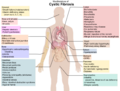 Cystic fibrosis manifestations
 -
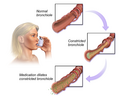 Bronchodilators
 -
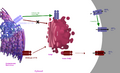 Elexacaftor tezacaftor ivacaftor mechanism of action


Sponsored Health Resource

W8MD Weight Loss, Sleep & MedSpa
Looking for physician-supervised weight loss, semaglutide, tirzepatide, or GLP-1 receptor agonist options? W8MD helps eligible patients in New York City, Brooklyn, New Jersey, Connecticut, Pennsylvania, Delaware, and greater Philadelphia with medical weight loss, sleep medicine, and long-term maintenance support.
GLP-1 specials: Affordable GLP-1 injections NYC and Philadelphia starting from $29.99/week and up for semaglutide with insurance accepted for qualifying visits, and $45/week and up for tirzepatide with insurance accepted for qualifying visits. Self-pay options start from $59.99/week and up for semaglutide and $69.99/week and up for tirzepatide.
- Medical weight loss NYC
- Affordable GLP-1 injections NYC
- Budget GLP-1 weight loss shots Philadelphia
- New Jersey medical weight loss
- NYC medical weight loss blog
- Philadelphia weight loss blog
- Sleep medicine and sleep apnea services
- W8MD MedSpa and wellness
Book a W8MD appointment · View GLP-1 specials
Paid promotional message. Eligibility, pricing, insurance coverage, medication availability, and results vary. Medical evaluation required.

Medical Disclaimer: WikiMD is for informational purposes only and is not a substitute for professional medical advice. Content may be inaccurate or outdated and should not be used for diagnosis or treatment. Always consult your healthcare provider for medical decisions. Verify information with trusted sources such as CDC.gov and NIH.gov. By using this site, you agree that WikiMD is not liable for any outcomes related to its content. See full disclaimer.
Credits:Most images are courtesy of Wikimedia commons, and templates, categories Wikipedia, licensed under CC BY SA or similar.
Translate page: - East Asian
中文,
日本,
한국어,
South Asian
हिन्दी,
தமிழ்,
తెలుగు,
Urdu,
ಕನ್ನಡ,
Southeast Asian
Indonesian,
Vietnamese,
Thai,
မြန်မာဘာသာ,
বাংলা
European
español,
Deutsch,
français,
Greek,
português do Brasil,
polski,
română,
русский,
Nederlands,
norsk,
svenska,
suomi,
Italian
Middle Eastern & African
عربى,
Turkish,
Persian,
Hebrew,
Afrikaans,
isiZulu,
Kiswahili,
Other
Bulgarian,
Hungarian,
Czech,
Swedish,
മലയാളം,
मराठी,
ਪੰਜਾਬੀ,
ગુજરાતી,
Portuguese,
Ukrainian

