Endovascular coiling
Endovascular coiling is a minimally invasive surgical technique used to treat aneurysms, particularly those located in the brain, known as intracranial aneurysms. This procedure is also referred to as endovascular embolization or coil embolization. Endovascular coiling aims to prevent aneurysms from rupturing and causing subarachnoid hemorrhage, a type of stroke that can lead to significant morbidity or mortality.
Overview[edit]
An aneurysm is a weak, bulging spot on the wall of a blood vessel where the blood pressure causes the vessel to balloon outward. If an aneurysm ruptures, it can lead to catastrophic internal bleeding and often requires immediate medical attention. Endovascular coiling is performed to seal off these weak spots in blood vessels, particularly in areas that are difficult to reach through traditional open surgery, such as the brain.
Procedure[edit]
The procedure is carried out under general anesthesia. A catheter is inserted into the femoral artery in the groin and navigated through the vascular system to the site of the aneurysm under X-ray guidance. Once the catheter is in place, tiny platinum coils are threaded through it and deployed into the aneurysm. The coils induce clotting (embolization) within the aneurysm, which seals it off from the main artery and prevents blood from entering and causing further growth or rupture.
Advantages and Disadvantages[edit]
The primary advantage of endovascular coiling is its minimally invasive nature, which typically results in shorter recovery times and less discomfort compared to open surgical procedures like craniotomy and clipping. However, it may not be suitable for all types of aneurysms, depending on their size, shape, and location. Additionally, there is a risk of the aneurysm re-opening (recanalization), which may require additional treatments.
Risks and Complications[edit]
While endovascular coiling is generally safe, it carries risks and potential complications, including:
- Reaction to contrast dye used during the procedure
- Damage to blood vessels
- Stroke or transient ischemic attack (TIA)
- Aneurysm rupture during the procedure
- Recanalization of the aneurysm
Follow-up Care[edit]
Patients will typically undergo follow-up imaging tests, such as magnetic resonance imaging (MRI) or computed tomography angiography (CTA), to ensure the aneurysm remains sealed off. Regular monitoring is crucial to detect any changes early.
Conclusion[edit]
Endovascular coiling represents a significant advancement in the treatment of brain aneurysms, offering a less invasive option with potentially quicker recovery times. However, it is essential for patients to discuss the benefits and risks with their healthcare provider to determine the most appropriate treatment plan for their specific condition.
 | This medical article is a stub. You can help WikiMD by expanding the page. |
Endovascular coiling[edit]
-
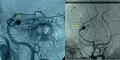 Coiled PCA residual aneurysm arteriogram
 -
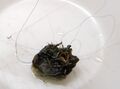 Aneurysma Coil
 -
 Circle of Willis from CT angio


Sponsored Health Resource

W8MD Weight Loss, Sleep & MedSpa
Looking for physician-supervised weight loss, semaglutide, tirzepatide, or GLP-1 receptor agonist options? W8MD helps eligible patients in New York City, Brooklyn, New Jersey, Connecticut, Pennsylvania, Delaware, and greater Philadelphia with medical weight loss, sleep medicine, and long-term maintenance support.
GLP-1 specials: Affordable GLP-1 injections NYC and Philadelphia starting from $29.99/week and up for semaglutide with insurance accepted for qualifying visits, and $45/week and up for tirzepatide with insurance accepted for qualifying visits. Self-pay options start from $59.99/week and up for semaglutide and $69.99/week and up for tirzepatide.
- Medical weight loss NYC
- Affordable GLP-1 injections NYC
- Budget GLP-1 weight loss shots Philadelphia
- New Jersey medical weight loss
- NYC medical weight loss blog
- Philadelphia weight loss blog
- Sleep medicine and sleep apnea services
- W8MD MedSpa and wellness
Book a W8MD appointment · View GLP-1 specials
Paid promotional message. Eligibility, pricing, insurance coverage, medication availability, and results vary. Medical evaluation required.

Medical Disclaimer: WikiMD is for informational purposes only and is not a substitute for professional medical advice. Content may be inaccurate or outdated and should not be used for diagnosis or treatment. Always consult your healthcare provider for medical decisions. Verify information with trusted sources such as CDC.gov and NIH.gov. By using this site, you agree that WikiMD is not liable for any outcomes related to its content. See full disclaimer.
Credits:Most images are courtesy of Wikimedia commons, and templates, categories Wikipedia, licensed under CC BY SA or similar.
Translate page: - East Asian
中文,
日本,
한국어,
South Asian
हिन्दी,
தமிழ்,
తెలుగు,
Urdu,
ಕನ್ನಡ,
Southeast Asian
Indonesian,
Vietnamese,
Thai,
မြန်မာဘာသာ,
বাংলা
European
español,
Deutsch,
français,
Greek,
português do Brasil,
polski,
română,
русский,
Nederlands,
norsk,
svenska,
suomi,
Italian
Middle Eastern & African
عربى,
Turkish,
Persian,
Hebrew,
Afrikaans,
isiZulu,
Kiswahili,
Other
Bulgarian,
Hungarian,
Czech,
Swedish,
മലയാളം,
मराठी,
ਪੰਜਾਬੀ,
ગુજરાતી,
Portuguese,
Ukrainian

