Facies
Facies is a term used in medicine to describe the outward appearance or phenotype of an individual, which may be influenced by a particular condition or disorder. This can include specific facial features, body habitus, or other physical characteristics that are often associated with certain medical conditions.
Definition[edit]
The term facies is derived from the Latin word for "face", and in medical terminology, it is used to describe the outward appearance of an individual, particularly the face. This can include specific facial features, body habitus, or other physical characteristics that are often associated with certain medical conditions. For example, the Down syndrome facies includes features such as slanted eyes, a flat nasal bridge, and a protruding tongue.
Clinical Significance[edit]
Facies can be a useful diagnostic tool in medicine. Certain medical conditions are associated with characteristic facies, and recognizing these can aid in diagnosis. For example, individuals with Cushing's syndrome often have a "moon facies" characterized by round, puffy cheeks and a large, round face. Similarly, individuals with Marfan syndrome often have a "dolichocephalic" facies characterized by a long, narrow face, high arched palate, and crowded teeth.
Examples of Facies[edit]
There are many examples of specific facies associated with medical conditions. These include:
- Down syndrome facies: Characterized by slanted eyes, a flat nasal bridge, and a protruding tongue.
- Cushing's syndrome facies: Characterized by round, puffy cheeks and a large, round face.
- Marfan syndrome facies: Characterized by a long, narrow face, high arched palate, and crowded teeth.
- Turner syndrome facies: Characterized by a broad chest, low hairline, and low-set ears.
- Fetal alcohol syndrome facies: Characterized by small eye openings, a thin upper lip, and a smooth philtrum.
See Also[edit]

This WikiMD article can only be edited by registered and verified editors. You can log in or register.
-
Eolianite formation on Long Island
-
Superposition of geological layers in Isfjorden
-
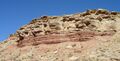 Triassic rock formations in Utah


Medical Disclaimer: WikiMD is for informational purposes only and is not a substitute for professional medical advice. Content may be inaccurate or outdated and should not be used for diagnosis or treatment. Always consult your healthcare provider for medical decisions. Verify information with trusted sources such as CDC.gov and NIH.gov. By using this site, you agree that WikiMD is not liable for any outcomes related to its content. See full disclaimer.
Credits:Most images are courtesy of Wikimedia commons, and templates, categories Wikipedia, licensed under CC BY SA or similar.
Translate page: - East Asian
中文,
日本,
한국어,
South Asian
हिन्दी,
தமிழ்,
తెలుగు,
Urdu,
ಕನ್ನಡ,
Southeast Asian
Indonesian,
Vietnamese,
Thai,
မြန်မာဘာသာ,
বাংলা
European
español,
Deutsch,
français,
Greek,
português do Brasil,
polski,
română,
русский,
Nederlands,
norsk,
svenska,
suomi,
Italian
Middle Eastern & African
عربى,
Turkish,
Persian,
Hebrew,
Afrikaans,
isiZulu,
Kiswahili,
Other
Bulgarian,
Hungarian,
Czech,
Swedish,
മലയാളം,
मराठी,
ਪੰਜਾਬੀ,
ગુજરાતી,
Portuguese,
Ukrainian


