Gelsemium sempervirens
Gelsemium sempervirens is a species of flowering plant in the family Gelsemiaceae. It is native to subtropical and tropical America: from Guatemala to the Southeastern United States. Common names include yellow jessamine or jasmine, Carolina jasmine or jessamine, evening trumpetflower, gelsemium and woodbine.
Description[edit]
Gelsemium sempervirens is an evergreen climbing vine with glossy, lance-shaped leaves and bright, yellow flowers. The flowers are trumpet-shaped, appearing in clusters and have a strong, sweet scent. The plant blooms in late winter or early spring, and the flowers are followed by dark, shiny berries.
Distribution and habitat[edit]
Gelsemium sempervirens is found in a variety of habitats, from moist, low woods to dry, sandy soils. It is most commonly found in the coastal plains and Piedmont regions of the southeastern United States, but its range extends south to Guatemala and west to Texas.
Uses[edit]
Gelsemium sempervirens has been used in traditional medicine for a variety of ailments, including anxiety, neuralgia, and migraines. However, all parts of the plant are highly toxic if ingested, and it should be used with caution.
Toxicity[edit]
All parts of Gelsemium sempervirens are highly toxic, including the nectar. The plant contains several toxic compounds, including gelsemine and gelseminine. Symptoms of poisoning include weakness, blurred vision, difficulty in swallowing and speaking, slow and weak pulse, and eventually respiratory failure.
Cultivation[edit]
Gelsemium sempervirens is often grown as an ornamental plant for its attractive, fragrant flowers. It is hardy to USDA zone 7 and prefers well-drained soil and a position in full sun or partial shade.
References[edit]

This flora-related article is a stub. You can help WikiMD by expanding it.
-
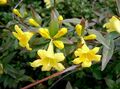 Gelsemium sempervirens
 -
 Carolina jessamine shrub
 -
 Carolina jessamine


Medical Disclaimer: WikiMD is for informational purposes only and is not a substitute for professional medical advice. Content may be inaccurate or outdated and should not be used for diagnosis or treatment. Always consult your healthcare provider for medical decisions. Verify information with trusted sources such as CDC.gov and NIH.gov. By using this site, you agree that WikiMD is not liable for any outcomes related to its content. See full disclaimer.
Credits:Most images are courtesy of Wikimedia commons, and templates, categories Wikipedia, licensed under CC BY SA or similar.
Translate page: - East Asian
中文,
日本,
한국어,
South Asian
हिन्दी,
தமிழ்,
తెలుగు,
Urdu,
ಕನ್ನಡ,
Southeast Asian
Indonesian,
Vietnamese,
Thai,
မြန်မာဘာသာ,
বাংলা
European
español,
Deutsch,
français,
Greek,
português do Brasil,
polski,
română,
русский,
Nederlands,
norsk,
svenska,
suomi,
Italian
Middle Eastern & African
عربى,
Turkish,
Persian,
Hebrew,
Afrikaans,
isiZulu,
Kiswahili,
Other
Bulgarian,
Hungarian,
Czech,
Swedish,
മലയാളം,
मराठी,
ਪੰਜਾਬੀ,
ગુજરાતી,
Portuguese,
Ukrainian

