Illegal drug trade
Illegal drug trade refers to the global black market dedicated to the cultivation, manufacture, distribution, and sale of drugs that are subject to drug prohibition laws. The United Nations Office on Drugs and Crime (UNODC) estimates that the monetary value of the global illicit drug market is $322 billion annually.
History[edit]
The illegal drug trade has a long history, with opium trade dating back to the 19th century. The Opium Wars between Britain and China were largely fueled by the illegal opium trade. In the 20th century, the illegal drug trade expanded significantly due to the prohibition of alcohol and the rise of organized crime in the United States.
Types of Drugs[edit]
The most commonly traded illegal drugs are cannabis, cocaine, heroin, and methamphetamine. Other drugs that are commonly traded include MDMA, LSD, and psilocybin mushrooms.
Impact[edit]
The illegal drug trade has significant social, economic, and political impacts. It contributes to crime, destabilizes communities, and undermines political and economic stability. The trade also has significant health impacts, contributing to the spread of diseases such as HIV/AIDS and hepatitis.
Efforts to Combat[edit]
Efforts to combat the illegal drug trade include law enforcement, drug education, and harm reduction strategies. The War on Drugs is a U.S. government campaign aimed at reducing the illegal drug trade. Internationally, the UNODC works to combat the illegal drug trade through a variety of programs and initiatives.
See Also[edit]
 | This crime-related article is a stub. You can help WikiMD by expanding the page. |
-
 Illegal drug trade
 -
 Illegal drug trade
 -
 Illegal drug trade
 -
 Illegal drug trade
 -
 Illegal drug trade
 -
 Illegal drug trade
 -
 Illegal drug trade
 -
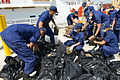 Illegal drug trade
 -
 Illegal drug trade
 -
 Illegal drug trade
 -
 Illegal drug trade
 -
 Illegal drug trade


.jpg)

Sponsored Health Resource

W8MD Weight Loss, Sleep & MedSpa
Looking for physician-supervised weight loss, semaglutide, tirzepatide, or GLP-1 receptor agonist options? W8MD helps eligible patients in New York City, Brooklyn, New Jersey, Connecticut, Pennsylvania, Delaware, and greater Philadelphia with medical weight loss, sleep medicine, and long-term maintenance support.
GLP-1 specials: Affordable GLP-1 injections NYC and Philadelphia starting from $29.99/week and up for semaglutide with insurance accepted for qualifying visits, and $45/week and up for tirzepatide with insurance accepted for qualifying visits. Self-pay options start from $59.99/week and up for semaglutide and $69.99/week and up for tirzepatide.
- Medical weight loss NYC
- Affordable GLP-1 injections NYC
- Budget GLP-1 weight loss shots Philadelphia
- New Jersey medical weight loss
- NYC medical weight loss blog
- Philadelphia weight loss blog
- Sleep medicine and sleep apnea services
- W8MD MedSpa and wellness
Book a W8MD appointment · View GLP-1 specials
Paid promotional message. Eligibility, pricing, insurance coverage, medication availability, and results vary. Medical evaluation required.

Medical Disclaimer: WikiMD is for informational purposes only and is not a substitute for professional medical advice. Content may be inaccurate or outdated and should not be used for diagnosis or treatment. Always consult your healthcare provider for medical decisions. Verify information with trusted sources such as CDC.gov and NIH.gov. By using this site, you agree that WikiMD is not liable for any outcomes related to its content. See full disclaimer.
Credits:Most images are courtesy of Wikimedia commons, and templates, categories Wikipedia, licensed under CC BY SA or similar.
Translate page: - East Asian
中文,
日本,
한국어,
South Asian
हिन्दी,
தமிழ்,
తెలుగు,
Urdu,
ಕನ್ನಡ,
Southeast Asian
Indonesian,
Vietnamese,
Thai,
မြန်မာဘာသာ,
বাংলা
European
español,
Deutsch,
français,
Greek,
português do Brasil,
polski,
română,
русский,
Nederlands,
norsk,
svenska,
suomi,
Italian
Middle Eastern & African
عربى,
Turkish,
Persian,
Hebrew,
Afrikaans,
isiZulu,
Kiswahili,
Other
Bulgarian,
Hungarian,
Czech,
Swedish,
മലയാളം,
मराठी,
ਪੰਜਾਬੀ,
ગુજરાતી,
Portuguese,
Ukrainian

