Ion chromatography
Ion chromatography (IC) is a form of liquid chromatography that separates ions and polar molecules based on their affinity to the ion exchanger. It works on almost any kind of charged molecule—including large proteins, small nucleotides, and amino acids. The principle of IC lies in the separation of ions and polar molecules in a liquid medium. This technique is widely used in the analysis of electrolytes, the separation of substances that are normally difficult to separate by other techniques, and the purification of water.
Principles of Ion Chromatography[edit]
Ion chromatography operates on the principle of ion exchange. It involves the separation of ions and polar molecules based on their charge. The sample is introduced into a column filled with an ion exchange resin. The ions in the sample are then separated based on their affinity to the ion exchanger. The ion exchanger is typically a resin or gel matrix consisting of polymeric materials. The ions in the sample exchange with ions in the resin, leading to the separation of the ions based on their charge.
Components of Ion Chromatography[edit]
The main components of an ion chromatography system include the pump, injector, column, detector, and the data analysis system. The pump moves the mobile phase and sample through the system. The injector introduces the sample into the mobile phase stream that carries it into the column. The column is where the separation of the sample components occurs. The detector identifies the separated components, and the data analysis system records the results.
Types of Ion Chromatography[edit]
There are two main types of ion chromatography: anion exchange chromatography and cation exchange chromatography. Anion exchange chromatography is used for the separation of anions, while cation exchange chromatography is used for the separation of cations.
Anion Exchange Chromatography[edit]
In anion exchange chromatography, the column is filled with a positively charged ion exchange resin. Anions in the sample are attracted to the positive charges on the resin and are separated based on their affinity to the resin.
Cation Exchange Chromatography[edit]
In cation exchange chromatography, the column is filled with a negatively charged ion exchange resin. Cations in the sample are attracted to the negative charges on the resin and are separated based on their affinity to the resin.
Applications of Ion Chromatography[edit]
Ion chromatography has a wide range of applications in various fields such as environmental monitoring, pharmaceuticals, food and beverage industry, and chemical research. It is used for the analysis of drinking water, wastewater, soil extracts, and many other types of samples. In the pharmaceutical industry, IC is used for the analysis of drug components and counterions. In the food industry, it is used for the analysis of additives, preservatives, and nutrients.
Advantages and Limitations[edit]
One of the main advantages of ion chromatography is its ability to analyze a wide range of ionic species with high sensitivity and selectivity. It is also capable of handling complex matrices. However, the technique has its limitations, including the requirement for specific types of columns and detectors for different applications, and the potential for ion exchange resin degradation over time.
Conclusion[edit]
Ion chromatography is a powerful analytical technique for the separation and analysis of ions and polar molecules. Its wide range of applications and high sensitivity make it an indispensable tool in many fields of scientific research and industry.

Ion chromatography[edit]
-
ICS 6000 Ion Chromatography System
-
History of Ion Exchange Chromatography
-
Ion Chromatogram
-
Simple Gradient Maker for Column Chromatography
-
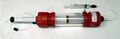 Ion Exchange Column
 -
Cecil Instruments Ion Chromatography System

Sponsored Health Resource

W8MD Weight Loss, Sleep & MedSpa
Looking for physician-supervised weight loss, semaglutide, tirzepatide, or GLP-1 receptor agonist options? W8MD helps eligible patients in New York City, Brooklyn, New Jersey, Connecticut, Pennsylvania, Delaware, and greater Philadelphia with medical weight loss, sleep medicine, and long-term maintenance support.
GLP-1 specials: Affordable GLP-1 injections NYC and Philadelphia starting from $29.99/week and up for semaglutide with insurance accepted for qualifying visits, and $45/week and up for tirzepatide with insurance accepted for qualifying visits. Self-pay options start from $59.99/week and up for semaglutide and $69.99/week and up for tirzepatide.
- Medical weight loss NYC
- Affordable GLP-1 injections NYC
- Budget GLP-1 weight loss shots Philadelphia
- New Jersey medical weight loss
- NYC medical weight loss blog
- Philadelphia weight loss blog
- Sleep medicine and sleep apnea services
- W8MD MedSpa and wellness
Book a W8MD appointment · View GLP-1 specials
Paid promotional message. Eligibility, pricing, insurance coverage, medication availability, and results vary. Medical evaluation required.

Medical Disclaimer: WikiMD is for informational purposes only and is not a substitute for professional medical advice. Content may be inaccurate or outdated and should not be used for diagnosis or treatment. Always consult your healthcare provider for medical decisions. Verify information with trusted sources such as CDC.gov and NIH.gov. By using this site, you agree that WikiMD is not liable for any outcomes related to its content. See full disclaimer.
Credits:Most images are courtesy of Wikimedia commons, and templates, categories Wikipedia, licensed under CC BY SA or similar.
Translate page: - East Asian
中文,
日本,
한국어,
South Asian
हिन्दी,
தமிழ்,
తెలుగు,
Urdu,
ಕನ್ನಡ,
Southeast Asian
Indonesian,
Vietnamese,
Thai,
မြန်မာဘာသာ,
বাংলা
European
español,
Deutsch,
français,
Greek,
português do Brasil,
polski,
română,
русский,
Nederlands,
norsk,
svenska,
suomi,
Italian
Middle Eastern & African
عربى,
Turkish,
Persian,
Hebrew,
Afrikaans,
isiZulu,
Kiswahili,
Other
Bulgarian,
Hungarian,
Czech,
Swedish,
മലയാളം,
मराठी,
ਪੰਜਾਬੀ,
ગુજરાતી,
Portuguese,
Ukrainian


