John E. Fryer
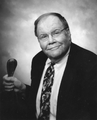
John E. Fryer (November 7, 1937 – February 21, 2003) was an American psychiatrist and gay rights activist best known for his anonymous speech at the 1972 American Psychiatric Association (APA) annual conference where he appeared in disguise and under the name Dr. H. Anonymous. This event significantly influenced the APA's decision to declassify homosexuality as a mental disorder in the Diagnostic and Statistical Manual of Mental Disorders (DSM).
Early life and education[edit]
Fryer was born in Kentucky and raised in a conservative Christian family. He attended Transylvania University for his undergraduate studies and later earned his medical degree from the Vanderbilt University School of Medicine. He completed his residency in psychiatry at the University of Pennsylvania.
Career[edit]
Fryer held faculty positions at several institutions, including the University of Pennsylvania and Temple University. He was also a staff psychiatrist at Philadelphia's Friends Hospital and the director of the Department of Psychiatry at the Philadelphia General Hospital.
Activism[edit]
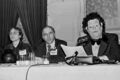
Fryer's most notable contribution to the gay rights movement was his speech at the 1972 APA conference. At the time, homosexuality was classified as a mental disorder in the DSM. Fryer, who was gay himself, appeared in disguise to protect his identity and career. His speech, in which he described the discrimination and bias faced by gay psychiatrists, was a pivotal moment in the movement to declassify homosexuality as a mental disorder.
Legacy[edit]
Fryer's activism had a profound impact on the field of psychiatry and the broader gay rights movement. In recognition of his contributions, the APA established the John E. Fryer Award in 2002. This award is given annually to an individual who has contributed to improving the mental health of sexual minorities.
See also[edit]
- History of homosexuality in American film
- Homosexuality and psychology
- LGBT rights in the United States
References[edit]
 | This article about lesbian, gay, bisexual or transgender topics is a stub. You can help WikiMD by expanding the page. |
.svg) | This psychiatry-related article is a stub. You can help WikiMD by expanding the page. |
-
 John E. Fryer
 -
 John E. Fryer
 -
 John E. Fryer MD Historical Marker
.webp)

.jpg)
Sponsored Health Resource

W8MD Weight Loss, Sleep & MedSpa
Looking for physician-supervised weight loss, semaglutide, tirzepatide, or GLP-1 receptor agonist options? W8MD helps eligible patients in New York City, Brooklyn, New Jersey, Connecticut, Pennsylvania, Delaware, and greater Philadelphia with medical weight loss, sleep medicine, and long-term maintenance support.
GLP-1 specials: Affordable GLP-1 injections NYC and Philadelphia starting from $29.99/week and up for semaglutide with insurance accepted for qualifying visits, and $45/week and up for tirzepatide with insurance accepted for qualifying visits. Self-pay options start from $59.99/week and up for semaglutide and $69.99/week and up for tirzepatide.
Medical weight loss NYC | Affordable GLP-1 injections NYC | Budget GLP-1 weight loss shots Philadelphia | New Jersey medical weight loss | NYC medical weight loss | Philadelphia medical weight loss | Sleep clinic NYC | W8MD's Philadelphia GLP-1 doctor | Weight loss prescriptions NYC
Book a W8MD appointment · View GLP-1 specials
Paid promotional message. Eligibility, pricing, insurance coverage, medication availability, and results vary. Medical evaluation required.

Medical Disclaimer: WikiMD is for informational purposes only and is not a substitute for professional medical advice. Content may be inaccurate or outdated and should not be used for diagnosis or treatment. Always consult your healthcare provider for medical decisions. Verify information with trusted sources such as CDC.gov and NIH.gov. By using this site, you agree that WikiMD is not liable for any outcomes related to its content. See full disclaimer.
Credits:Most images are courtesy of Wikimedia commons, and templates, categories Wikipedia, licensed under CC BY SA or similar.
Translate page: - East Asian
中文,
日本,
한국어,
South Asian
हिन्दी,
தமிழ்,
తెలుగు,
Urdu,
ಕನ್ನಡ,
Southeast Asian
Indonesian,
Vietnamese,
Thai,
မြန်မာဘာသာ,
বাংলা
European
español,
Deutsch,
français,
Greek,
português do Brasil,
polski,
română,
русский,
Nederlands,
norsk,
svenska,
suomi,
Italian
Middle Eastern & African
عربى,
Turkish,
Persian,
Hebrew,
Afrikaans,
isiZulu,
Kiswahili,
Other
Bulgarian,
Hungarian,
Czech,
Swedish,
മലയാളം,
मराठी,
ਪੰਜਾਬੀ,
ગુજરાતી,
Portuguese,
Ukrainian

