List of Bangladeshi sweets and desserts
List of Bangladeshi Sweets and Desserts is a compilation of the various types of sweets and desserts that originate from Bangladesh. These sweets and desserts are an integral part of Bangladeshi culture and cuisine, and are often served during festivals, celebrations, and special occasions.
Overview[edit]
Bangladeshi sweets and desserts are known for their unique flavors, rich textures, and the use of various ingredients such as milk, sugar, ghee, and flour. Many of these sweets and desserts have a long history and are deeply rooted in the country's cultural and culinary traditions.
List of Bangladeshi Sweets and Desserts[edit]
Rasgulla[edit]
Rasgulla is a popular sweet made from ball-shaped dumplings of chhena (an Indian cottage cheese) and semolina dough, cooked in light syrup made of sugar.
Sandesh[edit]
Sandesh is a dessert made from milk and sugar, often flavored with fruits, nuts, or spices.
Chomchom[edit]
Chomchom, or cham cham, is a traditional Bengali sweet made from flour, cream, sugar, saffron, lemon juice, and coconut flakes.
Pitha[edit]
Pitha is a type of rice cake common in Bangladesh and neighboring regions. It is often served during festivals and special occasions.
Mishti Doi[edit]
Mishti Doi is a fermented sweet dahi (yogurt) that is a popular dessert in Bangladesh. It is made with milk and sugar, and has a rich, creamy texture.
Rasmalai[edit]
Rasmalai is a dessert made of soft paneer balls immersed in chilled creamy milk. It is often flavored with cardamom.
Kalojam[edit]
Kalojam is a popular sweet in Bangladesh made from milk solids, sugar, and ghee. It is deep-fried and then soaked in sugar syrup.
Shemai[edit]
Shemai is a traditional Bangladeshi dessert made from vermicelli, milk, and sugar. It is often garnished with nuts and raisins.
See Also[edit]
References[edit]
 | This Bangladesh-related article is a stub. You can help WikiMD by expanding the page. |
List of Bangladeshi sweets and desserts[edit]
-
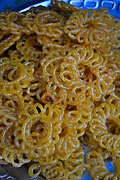 Amriti
 -
 Bonde
Bonde -
 Bogurar Doi
 -
 Chena Gaja
 -
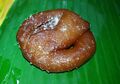 Chhanar Jilipi
 -
 Chanamukhi
 -
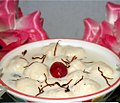 Chanar Payes


Sponsored Health Resource

W8MD Weight Loss, Sleep & MedSpa
Looking for physician-supervised weight loss, semaglutide, tirzepatide, or GLP-1 receptor agonist options? W8MD helps eligible patients in New York City, Brooklyn, New Jersey, Connecticut, Pennsylvania, Delaware, and greater Philadelphia with medical weight loss, sleep medicine, and long-term maintenance support.
GLP-1 specials: Affordable GLP-1 injections NYC and Philadelphia starting from $29.99/week and up for semaglutide with insurance accepted for qualifying visits, and $45/week and up for tirzepatide with insurance accepted for qualifying visits. Self-pay options start from $59.99/week and up for semaglutide and $69.99/week and up for tirzepatide.
- Medical weight loss NYC
- Affordable GLP-1 injections NYC
- Budget GLP-1 weight loss shots Philadelphia
- New Jersey medical weight loss
- NYC medical weight loss blog
- Philadelphia weight loss blog
- Sleep medicine and sleep apnea services
- W8MD MedSpa and wellness
Book a W8MD appointment · View GLP-1 specials
Paid promotional message. Eligibility, pricing, insurance coverage, medication availability, and results vary. Medical evaluation required.

Medical Disclaimer: WikiMD is for informational purposes only and is not a substitute for professional medical advice. Content may be inaccurate or outdated and should not be used for diagnosis or treatment. Always consult your healthcare provider for medical decisions. Verify information with trusted sources such as CDC.gov and NIH.gov. By using this site, you agree that WikiMD is not liable for any outcomes related to its content. See full disclaimer.
Credits:Most images are courtesy of Wikimedia commons, and templates, categories Wikipedia, licensed under CC BY SA or similar.
Translate page: - East Asian
中文,
日本,
한국어,
South Asian
हिन्दी,
தமிழ்,
తెలుగు,
Urdu,
ಕನ್ನಡ,
Southeast Asian
Indonesian,
Vietnamese,
Thai,
မြန်မာဘာသာ,
বাংলা
European
español,
Deutsch,
français,
Greek,
português do Brasil,
polski,
română,
русский,
Nederlands,
norsk,
svenska,
suomi,
Italian
Middle Eastern & African
عربى,
Turkish,
Persian,
Hebrew,
Afrikaans,
isiZulu,
Kiswahili,
Other
Bulgarian,
Hungarian,
Czech,
Swedish,
മലയാളം,
मराठी,
ਪੰਜਾਬੀ,
ગુજરાતી,
Portuguese,
Ukrainian

