Lithium aluminium hydride
Lithium aluminium hydride (LiAlH4) is a powerful reducing agent commonly used in organic synthesis. It is a white crystalline solid that is highly reactive and has a strong reducing potential. This compound is widely utilized in various chemical reactions due to its ability to donate hydride ions (H-) to organic compounds, resulting in the reduction of functional groups.
Chemical Properties[edit]
Lithium aluminium hydride has a molecular weight of 37.95 g/mol and a density of 0.917 g/cm3. It is highly soluble in ethers such as diethyl ether and tetrahydrofuran (THF), but reacts violently with water and alcohols. LiAlH4 is stable under normal conditions but can decompose at high temperatures or in the presence of moisture.
Synthesis[edit]
LiAlH4 can be synthesized by the reaction of lithium hydride (LiH) with aluminium chloride (AlCl3) in anhydrous diethyl ether. The reaction proceeds as follows:
2 LiH + AlCl3 → LiAlH4 + 2 LiCl
Applications[edit]
Lithium aluminium hydride is primarily used as a reducing agent in organic chemistry. It is commonly employed in the reduction of various functional groups, including carbonyl compounds (aldehydes, ketones, esters, carboxylic acids), epoxides, and nitriles. The hydride ions donated by LiAlH4 react with these functional groups, resulting in the formation of alcohols or amines.
Safety Considerations[edit]
LiAlH4 is a highly reactive compound and should be handled with extreme caution. It reacts violently with water, alcohols, and other protic solvents, releasing flammable hydrogen gas. It is also sensitive to air and moisture, which can cause decomposition and potential fire hazards. Proper protective equipment, such as gloves and goggles, should be worn when working with this compound.
References[edit]
1. Smith, Michael B., and Jerry March. "Advanced Organic Chemistry: Reactions, Mechanisms, and Structure." Wiley, 2007.
2. Li, Jie Jack. "Name Reactions: A Collection of Detailed Reaction Mechanisms." Springer, 2006.
See Also[edit]
-
 Scanning electron microscope image of lithium aluminium hydride
 -
 3D polyhedral model of the lithium aluminium hydride unit cell
 -
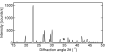 X-ray powder diffraction pattern of lithium aluminium hydride
 -
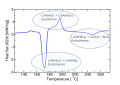 Differential scanning calorimetry of lithium aluminium hydride
 -
 Reactions involving lithium aluminium hydride
 -
 Volume versus gravimetric capacity plot


Medical Disclaimer: WikiMD is for informational purposes only and is not a substitute for professional medical advice. Content may be inaccurate or outdated and should not be used for diagnosis or treatment. Always consult your healthcare provider for medical decisions. Verify information with trusted sources such as CDC.gov and NIH.gov. By using this site, you agree that WikiMD is not liable for any outcomes related to its content. See full disclaimer.
Credits:Most images are courtesy of Wikimedia commons, and templates, categories Wikipedia, licensed under CC BY SA or similar.
Translate page: - East Asian
中文,
日本,
한국어,
South Asian
हिन्दी,
தமிழ்,
తెలుగు,
Urdu,
ಕನ್ನಡ,
Southeast Asian
Indonesian,
Vietnamese,
Thai,
မြန်မာဘာသာ,
বাংলা
European
español,
Deutsch,
français,
Greek,
português do Brasil,
polski,
română,
русский,
Nederlands,
norsk,
svenska,
suomi,
Italian
Middle Eastern & African
عربى,
Turkish,
Persian,
Hebrew,
Afrikaans,
isiZulu,
Kiswahili,
Other
Bulgarian,
Hungarian,
Czech,
Swedish,
മലയാളം,
मराठी,
ਪੰਜਾਬੀ,
ગુજરાતી,
Portuguese,
Ukrainian

