Management of Crohn's disease
Management of Crohn's disease involves first treating the acute symptoms of the disease, then maintaining remission. Since Crohn's can affect the digestive system at any point from the mouth to the anus, it can cause a wide variety of symptoms including: abdominal pain, diarrhea, bloody stools, and weight loss. Severe cases can cause chronic pain, bowel obstructions, and malnutrition.
Initial treatment[edit]
Initial treatment of Crohn's disease involves the use of medications to reduce inflammation and suppress the immune system. Corticosteroids such as prednisone are commonly used, as are immunomodulators such as azathioprine. In severe cases, biologic therapy may be used. This can include drugs such as infliximab, adalimumab, and certolizumab pegol.
Maintenance therapy[edit]
Once the acute symptoms have been treated, the goal is to maintain remission. This typically involves the continued use of medications, as well as lifestyle changes. Dietary modifications can be helpful, as can smoking cessation. Regular exercise and adequate sleep can also contribute to maintaining remission.
Surgery[edit]
In some cases, when medication and lifestyle changes are not enough to manage the symptoms of Crohn's, surgery may be necessary. This can involve removing a portion of the digestive tract, or creating a stoma for waste to bypass an inflamed area.
Complications[edit]
Crohn's disease can lead to a number of complications, including intestinal obstruction, fistulas, and malnutrition. It can also increase the risk of colorectal cancer.
See also[edit]
References[edit]

This WikiMD article can only be edited by registered and verified editors. You can log in or register.
Management of Crohn's disease[edit]
-
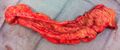 Resected ileum from a Crohn's disease patient
 -
Trichuris trichiura egg

Sponsored Health Resource

W8MD Weight Loss, Sleep & MedSpa
Looking for physician-supervised weight loss, semaglutide, tirzepatide, or GLP-1 receptor agonist options? W8MD helps eligible patients in New York City, Brooklyn, New Jersey, Connecticut, Pennsylvania, Delaware, and greater Philadelphia with medical weight loss, sleep medicine, and long-term maintenance support.
GLP-1 specials: Affordable GLP-1 injections NYC and Philadelphia starting from $29.99/week and up for semaglutide with insurance accepted for qualifying visits, and $45/week and up for tirzepatide with insurance accepted for qualifying visits. Self-pay options start from $59.99/week and up for semaglutide and $69.99/week and up for tirzepatide.
- Medical weight loss NYC
- Affordable GLP-1 injections NYC
- Budget GLP-1 weight loss shots Philadelphia
- New Jersey medical weight loss
- NYC medical weight loss blog
- Philadelphia weight loss blog
- Sleep medicine and sleep apnea services
- W8MD MedSpa and wellness
Book a W8MD appointment · View GLP-1 specials
Paid promotional message. Eligibility, pricing, insurance coverage, medication availability, and results vary. Medical evaluation required.

Medical Disclaimer: WikiMD is for informational purposes only and is not a substitute for professional medical advice. Content may be inaccurate or outdated and should not be used for diagnosis or treatment. Always consult your healthcare provider for medical decisions. Verify information with trusted sources such as CDC.gov and NIH.gov. By using this site, you agree that WikiMD is not liable for any outcomes related to its content. See full disclaimer.
Credits:Most images are courtesy of Wikimedia commons, and templates, categories Wikipedia, licensed under CC BY SA or similar.
Translate page: - East Asian
中文,
日本,
한국어,
South Asian
हिन्दी,
தமிழ்,
తెలుగు,
Urdu,
ಕನ್ನಡ,
Southeast Asian
Indonesian,
Vietnamese,
Thai,
မြန်မာဘာသာ,
বাংলা
European
español,
Deutsch,
français,
Greek,
português do Brasil,
polski,
română,
русский,
Nederlands,
norsk,
svenska,
suomi,
Italian
Middle Eastern & African
عربى,
Turkish,
Persian,
Hebrew,
Afrikaans,
isiZulu,
Kiswahili,
Other
Bulgarian,
Hungarian,
Czech,
Swedish,
മലയാളം,
मराठी,
ਪੰਜਾਬੀ,
ગુજરાતી,
Portuguese,
Ukrainian

