Medical community of ancient Rome
The Medical Community of Ancient Rome refers to the collective body of individuals, practices, institutions, and knowledge systems related to health care and medicine in ancient Rome, spanning from the founding of Rome in 753 BC to the fall of the Western Roman Empire in 476 AD. This period witnessed significant developments in medical theory, practice, and the professionalization of medicine, influenced by earlier civilizations such as the Greeks and Egyptians, and contributing to the foundation of Western medical tradition.
History and Development[edit]
The medical practices in ancient Rome were initially rooted in religion and the supernatural, with the priests and Vestal Virgins performing rituals to appease the gods for health and healing. However, with the introduction of Greek medicine in the 3rd century BC, particularly after the Roman conquest of Greece, there was a shift towards empirical observation and naturalistic explanations of disease. This period saw the emergence of the first Roman medical practitioners who were influenced by the works of Greek physicians like Hippocrates and later Galen, who lived and worked in Rome.
Medical Practitioners[edit]
The medical community in ancient Rome was diverse, consisting of various types of practitioners:
- Medici: These were freeborn Roman citizens who practiced medicine as a profession. They often received formal training and were considered reputable physicians.
- Archiatroi: The highest-ranking medical practitioners, often serving the Roman elite and emperors. They were akin to modern-day specialists.
- Medicus: This term referred to a general practitioner, often a slave or a freedman, who served the broader public.
- Pharmacopolae: Pharmacists or apothecaries who prepared and sold medicines.
- Chirurgi: Surgeons, who were often Greek slaves or freedmen, specialized in surgical interventions.
Medical Knowledge and Practices[edit]
Ancient Roman medical knowledge was a blend of empirical observations, Greek theories, and local practices. The Romans made significant contributions in areas such as public health, surgery, and pharmacology.
- Public Health: The Romans were pioneers in public health, establishing aqueducts for clean water, sewers for sanitation, and public baths for hygiene. They also built hospitals (valetudinaria) for soldiers and gladiators.
- Surgery: Roman surgeons performed various surgical procedures, including cataract surgery, amputations, and dental extractions, using specialized tools.
- Pharmacology: Medicines were derived from plants, animals, and minerals. The Romans also documented medical recipes in texts like the De Materia Medica by Dioscorides.
Legacy[edit]
The medical community of ancient Rome laid the groundwork for Western medicine. The texts and practices of Roman physicians, especially Galen, dominated medical thought well into the Middle Ages and Renaissance. Their emphasis on public health, hygiene, and empirical observation has had a lasting impact on medical practice and public health policy.
See Also[edit]
 | This medical article is a stub. You can help WikiMD by expanding the page. |
-
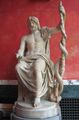 Statue of Asklepios, the Greek god of medicine
 -
Isola Tiberina, the site of ancient Roman medical facilities
-
Ruins of the Temple of Aesculapius on Isola Tiberina
-
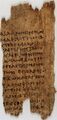 Fragment of the Hippocratic oath on papyrus
 -
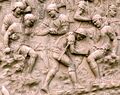 Capsarius, a Roman medical orderly depicted on Trajan's Column


.jpg)
Sponsored Health Resource

W8MD Weight Loss, Sleep & MedSpa
Looking for physician-supervised weight loss, semaglutide, tirzepatide, or GLP-1 receptor agonist options? W8MD helps eligible patients in New York City, Brooklyn, New Jersey, Connecticut, Pennsylvania, Delaware, and greater Philadelphia with medical weight loss, sleep medicine, and long-term maintenance support.
GLP-1 specials: Affordable GLP-1 injections NYC and Philadelphia starting from $29.99/week and up for semaglutide with insurance accepted for qualifying visits, and $45/week and up for tirzepatide with insurance accepted for qualifying visits. Self-pay options start from $59.99/week and up for semaglutide and $69.99/week and up for tirzepatide.
- Medical weight loss NYC
- Affordable GLP-1 injections NYC
- Budget GLP-1 weight loss shots Philadelphia
- New Jersey medical weight loss
- NYC medical weight loss blog
- Philadelphia weight loss blog
- Sleep medicine and sleep apnea services
- W8MD MedSpa and wellness
Book a W8MD appointment · View GLP-1 specials
Paid promotional message. Eligibility, pricing, insurance coverage, medication availability, and results vary. Medical evaluation required.

Medical Disclaimer: WikiMD is for informational purposes only and is not a substitute for professional medical advice. Content may be inaccurate or outdated and should not be used for diagnosis or treatment. Always consult your healthcare provider for medical decisions. Verify information with trusted sources such as CDC.gov and NIH.gov. By using this site, you agree that WikiMD is not liable for any outcomes related to its content. See full disclaimer.
Credits:Most images are courtesy of Wikimedia commons, and templates, categories Wikipedia, licensed under CC BY SA or similar.
Translate page: - East Asian
中文,
日本,
한국어,
South Asian
हिन्दी,
தமிழ்,
తెలుగు,
Urdu,
ಕನ್ನಡ,
Southeast Asian
Indonesian,
Vietnamese,
Thai,
မြန်မာဘာသာ,
বাংলা
European
español,
Deutsch,
français,
Greek,
português do Brasil,
polski,
română,
русский,
Nederlands,
norsk,
svenska,
suomi,
Italian
Middle Eastern & African
عربى,
Turkish,
Persian,
Hebrew,
Afrikaans,
isiZulu,
Kiswahili,
Other
Bulgarian,
Hungarian,
Czech,
Swedish,
മലയാളം,
मराठी,
ਪੰਜਾਬੀ,
ગુજરાતી,
Portuguese,
Ukrainian


