Myxozoa
Myxozoa are a group of parasitic microorganisms that are related to cnidarians. They are microscopic and have complex life cycles. They are known to infect fish, annelids, and bryozoans.
Taxonomy[edit]
Myxozoa was originally classified as a protozoan but later reclassified as a cnidarian due to its similar genetic and morphological characteristics. The group contains over 1300 species, divided into two orders: Myxosporea and Malacosporea.
Morphology[edit]
Myxozoa are microscopic and have a complex structure. They consist of a single cell surrounded by a protective shell, with two types of spores: myxospores and actinospores. Myxospores are produced in the host's tissues, while actinospores are produced in the alternate host.
Life Cycle[edit]
The life cycle of Myxozoa involves two hosts. The primary host is usually a fish, where the parasite forms myxospores. These spores are released into the water and ingested by the secondary host, usually an annelid or bryozoan. In the secondary host, the spores transform into actinospores, which are released back into the water to infect new fish hosts.
Pathology[edit]
Myxozoa can cause a variety of diseases in fish, including myxobolus cerebralis, which causes whirling disease in trout. They can also cause significant economic losses in aquaculture.
Treatment and Control[edit]
Treatment of Myxozoa infections is difficult due to the complex life cycle of the parasite. Control measures include good hygiene practices in aquaculture and the use of drugs such as praziquantel.
See Also[edit]

This WikiMD article can only be edited by registered and verified editors. You can log in or register.
Myxozoa[edit]
-
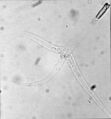 Fdl17-9-grey


Medical Disclaimer: WikiMD is for informational purposes only and is not a substitute for professional medical advice. Content may be inaccurate or outdated and should not be used for diagnosis or treatment. Always consult your healthcare provider for medical decisions. Verify information with trusted sources such as CDC.gov and NIH.gov. By using this site, you agree that WikiMD is not liable for any outcomes related to its content. See full disclaimer.
Credits:Most images are courtesy of Wikimedia commons, and templates, categories Wikipedia, licensed under CC BY SA or similar.
Translate page: - East Asian
中文,
日本,
한국어,
South Asian
हिन्दी,
தமிழ்,
తెలుగు,
Urdu,
ಕನ್ನಡ,
Southeast Asian
Indonesian,
Vietnamese,
Thai,
မြန်မာဘာသာ,
বাংলা
European
español,
Deutsch,
français,
Greek,
português do Brasil,
polski,
română,
русский,
Nederlands,
norsk,
svenska,
suomi,
Italian
Middle Eastern & African
عربى,
Turkish,
Persian,
Hebrew,
Afrikaans,
isiZulu,
Kiswahili,
Other
Bulgarian,
Hungarian,
Czech,
Swedish,
മലയാളം,
मराठी,
ਪੰਜਾਬੀ,
ગુજરાતી,
Portuguese,
Ukrainian

