Night vision
Night vision refers to the ability to see in low-light conditions. This can be achieved either biologically through special physical structures and adaptations, or technologically through the use of special equipment and devices.
Biological Night Vision[edit]
Many animals, including certain species of birds, mammals, and reptiles, have evolved to have superior night vision compared to humans. This is often due to the presence of a layer of cells in their eyes called the tapetum lucidum, which reflects light back through the retina and increases the amount of light available for the photoreceptors.
Technological Night Vision[edit]
Technological night vision can be achieved through a variety of methods, including image intensification, thermal imaging, and active illumination.
Image Intensification[edit]
Image intensification works by amplifying the available light, such as moonlight or starlight, to levels that can be detected by the human eye. This is often achieved through the use of an image intensifier tube, which uses a photocathode to convert the light into electrons, which are then amplified and converted back into light by a phosphor screen.
Thermal Imaging[edit]
Thermal imaging works by detecting the differences in temperature between objects and their surroundings. This is often achieved through the use of a microbolometer, which measures the changes in electrical resistance caused by changes in temperature.
Active Illumination[edit]
Active illumination works by projecting a beam of infrared light, which is invisible to the human eye but can be detected by special sensors. This is often used in conjunction with image intensification or thermal imaging to improve visibility in very low-light conditions.
See Also[edit]
References[edit]

This WikiMD article can only be edited by registered and verified editors. You can log in or register.
Night_vision[edit]
-
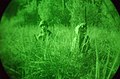 Night vision
 -
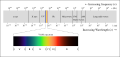 Electromagnetic spectrum
 -
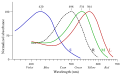 Cone response
 -
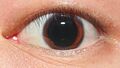 Human eye in dim light
 -
 Night vision video
 -
 M3 Sniperscope
 -
 M60 Patton Medium Tank
 -
 Night vision device


Sponsored Health Resource

W8MD Weight Loss, Sleep & MedSpa
Looking for physician-supervised weight loss, semaglutide, tirzepatide, or GLP-1 receptor agonist options? W8MD helps eligible patients in New York City, Brooklyn, New Jersey, Connecticut, Pennsylvania, Delaware, and greater Philadelphia with medical weight loss, sleep medicine, and long-term maintenance support.
GLP-1 specials: Affordable GLP-1 injections NYC and Philadelphia starting from $29.99/week and up for semaglutide with insurance accepted for qualifying visits, and $45/week and up for tirzepatide with insurance accepted for qualifying visits. Self-pay options start from $59.99/week and up for semaglutide and $69.99/week and up for tirzepatide.
- Medical weight loss NYC
- Affordable GLP-1 injections NYC
- Budget GLP-1 weight loss shots Philadelphia
- New Jersey medical weight loss
- NYC medical weight loss blog
- Philadelphia weight loss blog
- Sleep medicine and sleep apnea services
- W8MD MedSpa and wellness
Book a W8MD appointment · View GLP-1 specials
Paid promotional message. Eligibility, pricing, insurance coverage, medication availability, and results vary. Medical evaluation required.

Medical Disclaimer: WikiMD is for informational purposes only and is not a substitute for professional medical advice. Content may be inaccurate or outdated and should not be used for diagnosis or treatment. Always consult your healthcare provider for medical decisions. Verify information with trusted sources such as CDC.gov and NIH.gov. By using this site, you agree that WikiMD is not liable for any outcomes related to its content. See full disclaimer.
Credits:Most images are courtesy of Wikimedia commons, and templates, categories Wikipedia, licensed under CC BY SA or similar.
Translate page: - East Asian
中文,
日本,
한국어,
South Asian
हिन्दी,
தமிழ்,
తెలుగు,
Urdu,
ಕನ್ನಡ,
Southeast Asian
Indonesian,
Vietnamese,
Thai,
မြန်မာဘာသာ,
বাংলা
European
español,
Deutsch,
français,
Greek,
português do Brasil,
polski,
română,
русский,
Nederlands,
norsk,
svenska,
suomi,
Italian
Middle Eastern & African
عربى,
Turkish,
Persian,
Hebrew,
Afrikaans,
isiZulu,
Kiswahili,
Other
Bulgarian,
Hungarian,
Czech,
Swedish,
മലയാളം,
मराठी,
ਪੰਜਾਬੀ,
ગુજરાતી,
Portuguese,
Ukrainian

