Penicillic acid
Penicillic acid is a mycotoxin produced by several species of fungus, including Penicillium, Aspergillus, and Byssochlamys. It is a polyketide derivative, specifically a dihydroisocoumarin, and is chemically related to other mycotoxins such as patulin and citrinin.
Chemical Structure and Properties[edit]
Penicillic acid has the chemical formula C8H8O3 and a molecular weight of 152.15 g/mol. It is a white crystalline solid at room temperature, and is soluble in water, ethanol, and other polar solvents. Its chemical structure consists of a six-membered ring with a carboxylic acid group and a ketone group.
Biosynthesis[edit]
The biosynthesis of penicillic acid involves the condensation of one molecule of acetyl-CoA and five molecules of malonyl-CoA in a process catalyzed by a polyketide synthase enzyme. This is followed by cyclization and oxidation to form the final product.
Toxicity[edit]
Penicillic acid is toxic to both humans and animals. It can cause damage to the kidneys and liver, and can also affect the immune system. In addition, it has been shown to have mutagenic and carcinogenic effects.
Detection and Control[edit]
Methods for the detection of penicillic acid in food and feed include chromatography, mass spectrometry, and enzyme-linked immunosorbent assay (ELISA). Control of penicillic acid production in food and feed involves good agricultural and storage practices, as well as the use of antifungal agents.
See Also[edit]
This mycotoxin-related article is a stub. You can help WikiMD by expanding it.
Penicillic_acid[edit]
-
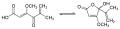 Chemical structure of Penicillic acid
 -
3D ball model of Penicillic acid

Sponsored Health Resource

W8MD Weight Loss, Sleep & MedSpa
Looking for physician-supervised weight loss, semaglutide, tirzepatide, or GLP-1 receptor agonist options? W8MD helps eligible patients in New York City, Brooklyn, New Jersey, Connecticut, Pennsylvania, Delaware, and greater Philadelphia with medical weight loss, sleep medicine, and long-term maintenance support.
GLP-1 specials: Affordable GLP-1 injections NYC and Philadelphia starting from $29.99/week and up for semaglutide with insurance accepted for qualifying visits, and $45/week and up for tirzepatide with insurance accepted for qualifying visits. Self-pay options start from $59.99/week and up for semaglutide and $69.99/week and up for tirzepatide.
- Medical weight loss NYC
- Affordable GLP-1 injections NYC
- Budget GLP-1 weight loss shots Philadelphia
- New Jersey medical weight loss
- NYC medical weight loss blog
- Philadelphia weight loss blog
- Sleep medicine and sleep apnea services
- W8MD MedSpa and wellness
Book a W8MD appointment · View GLP-1 specials
Paid promotional message. Eligibility, pricing, insurance coverage, medication availability, and results vary. Medical evaluation required.

Medical Disclaimer: WikiMD is for informational purposes only and is not a substitute for professional medical advice. Content may be inaccurate or outdated and should not be used for diagnosis or treatment. Always consult your healthcare provider for medical decisions. Verify information with trusted sources such as CDC.gov and NIH.gov. By using this site, you agree that WikiMD is not liable for any outcomes related to its content. See full disclaimer.
Credits:Most images are courtesy of Wikimedia commons, and templates, categories Wikipedia, licensed under CC BY SA or similar.
Translate page: - East Asian
中文,
日本,
한국어,
South Asian
हिन्दी,
தமிழ்,
తెలుగు,
Urdu,
ಕನ್ನಡ,
Southeast Asian
Indonesian,
Vietnamese,
Thai,
မြန်မာဘာသာ,
বাংলা
European
español,
Deutsch,
français,
Greek,
português do Brasil,
polski,
română,
русский,
Nederlands,
norsk,
svenska,
suomi,
Italian
Middle Eastern & African
عربى,
Turkish,
Persian,
Hebrew,
Afrikaans,
isiZulu,
Kiswahili,
Other
Bulgarian,
Hungarian,
Czech,
Swedish,
മലയാളം,
मराठी,
ਪੰਜਾਬੀ,
ગુજરાતી,
Portuguese,
Ukrainian


