Poliovirus
Poliovirus is a member of the family Picornaviridae and the genus Enterovirus. It is an RNA virus that causes poliomyelitis, a disease that can lead to paralysis.
Structure[edit]
Poliovirus is a non-enveloped virus with an icosahedral symmetry. Its capsid is composed of 60 copies each of four different viral proteins. The genome of the poliovirus is a single-stranded positive-sense RNA molecule approximately 7500 nucleotides long.
Life Cycle[edit]
The life cycle of the poliovirus begins when it attaches to a receptor on the surface of a host cell. The virus then enters the cell and uncoats its RNA genome. The RNA is translated into a polyprotein, which is then cleaved into individual viral proteins. These proteins and the viral RNA assemble into new virus particles, which are released from the cell to infect other cells.
Pathogenesis[edit]
Poliovirus primarily infects the gastrointestinal tract, but it can also spread to the central nervous system and cause paralysis. The virus is transmitted through the fecal-oral route, and it can survive in the environment for several weeks.
Prevention and Treatment[edit]
There is no cure for poliomyelitis, but it can be prevented with the polio vaccine. There are two types of polio vaccines: the inactivated polio vaccine (IPV) and the oral polio vaccine (OPV). Both vaccines stimulate the immune system to produce antibodies against the poliovirus.
See Also[edit]
References[edit]

This WikiMD article can only be edited by registered and verified editors. You can log in or register.
Poliovirus[edit]
-
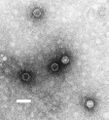 Poliovirus
 -
Poliovirus 3D structure
-
Poliovirus life cycle
-
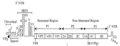 Poliovirus genome
 -
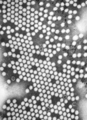 Poliovirus electron micrograph
 -
CD155 molecules complexed with a poliovirus particle
-
Poliovirus binding receptor


Medical Disclaimer: WikiMD is for informational purposes only and is not a substitute for professional medical advice. Content may be inaccurate or outdated and should not be used for diagnosis or treatment. Always consult your healthcare provider for medical decisions. Verify information with trusted sources such as CDC.gov and NIH.gov. By using this site, you agree that WikiMD is not liable for any outcomes related to its content. See full disclaimer.
Credits:Most images are courtesy of Wikimedia commons, and templates, categories Wikipedia, licensed under CC BY SA or similar.
Translate page: - East Asian
中文,
日本,
한국어,
South Asian
हिन्दी,
தமிழ்,
తెలుగు,
Urdu,
ಕನ್ನಡ,
Southeast Asian
Indonesian,
Vietnamese,
Thai,
မြန်မာဘာသာ,
বাংলা
European
español,
Deutsch,
français,
Greek,
português do Brasil,
polski,
română,
русский,
Nederlands,
norsk,
svenska,
suomi,
Italian
Middle Eastern & African
عربى,
Turkish,
Persian,
Hebrew,
Afrikaans,
isiZulu,
Kiswahili,
Other
Bulgarian,
Hungarian,
Czech,
Swedish,
മലയാളം,
मराठी,
ਪੰਜਾਬੀ,
ગુજરાતી,
Portuguese,
Ukrainian


