Supramarginal gyrus
The Supramarginal gyrus is a part of the cerebral cortex in the human brain. It is located in the parietal lobe and is part of the Brodmann area 40. The supramarginal gyrus is involved in several key functions of the brain, including language perception and processing, and spatial cognition.
Anatomy[edit]
The supramarginal gyrus is located on the lateral surface of the parietal lobe, wrapping around the end of the lateral sulcus (Sylvian fissure). It is surrounded by the superior temporal gyrus below and the angular gyrus behind. The supramarginal gyrus is part of the inferior parietal lobule, along with the angular gyrus.
Function[edit]
The supramarginal gyrus plays a crucial role in several cognitive functions. It is involved in the perception and processing of language, particularly in phonological processing, which is the ability to discern individual sounds in words. Damage to this area can result in phonological dyslexia, a condition characterized by difficulty reading unfamiliar words and nonwords.
The supramarginal gyrus is also involved in spatial cognition, including the perception of one's own body and its positioning in space. This is known as proprioception. Damage to the supramarginal gyrus can lead to conditions such as Gerstmann syndrome, which includes symptoms like left-right confusion and difficulty with writing (agraphia).
Clinical significance[edit]
Understanding the role of the supramarginal gyrus in these cognitive functions has important implications for the diagnosis and treatment of various neurological and psychiatric conditions. For example, it may be involved in conditions such as schizophrenia and dyslexia. Further research is needed to fully understand the extent of the supramarginal gyrus's involvement in these conditions.
See also[edit]
References[edit]
 | This neuroscience article is a stub. You can help WikiMD by expanding the page. |
-
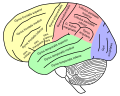 Lateral view of the brain with labeled gyri
 -
 Gray's anatomy illustration of the supramarginal gyrus
 -
 Animation of the supramarginal gyrus


Sponsored Health Resource

W8MD Weight Loss, Sleep & MedSpa
Looking for physician-supervised weight loss, semaglutide, tirzepatide, or GLP-1 receptor agonist options? W8MD helps eligible patients in New York City, Brooklyn, New Jersey, Connecticut, Pennsylvania, Delaware, and greater Philadelphia with medical weight loss, sleep medicine, and long-term maintenance support.
GLP-1 specials: Affordable GLP-1 injections NYC and Philadelphia starting from $29.99/week and up for semaglutide with insurance accepted for qualifying visits, and $45/week and up for tirzepatide with insurance accepted for qualifying visits. Self-pay options start from $59.99/week and up for semaglutide and $69.99/week and up for tirzepatide.
- Medical weight loss NYC
- Affordable GLP-1 injections NYC
- Budget GLP-1 weight loss shots Philadelphia
- New Jersey medical weight loss
- NYC medical weight loss blog
- Philadelphia weight loss blog
- Sleep medicine and sleep apnea services
- W8MD MedSpa and wellness
Book a W8MD appointment · View GLP-1 specials
Paid promotional message. Eligibility, pricing, insurance coverage, medication availability, and results vary. Medical evaluation required.

Medical Disclaimer: WikiMD is for informational purposes only and is not a substitute for professional medical advice. Content may be inaccurate or outdated and should not be used for diagnosis or treatment. Always consult your healthcare provider for medical decisions. Verify information with trusted sources such as CDC.gov and NIH.gov. By using this site, you agree that WikiMD is not liable for any outcomes related to its content. See full disclaimer.
Credits:Most images are courtesy of Wikimedia commons, and templates, categories Wikipedia, licensed under CC BY SA or similar.
Translate page: - East Asian
中文,
日本,
한국어,
South Asian
हिन्दी,
தமிழ்,
తెలుగు,
Urdu,
ಕನ್ನಡ,
Southeast Asian
Indonesian,
Vietnamese,
Thai,
မြန်မာဘာသာ,
বাংলা
European
español,
Deutsch,
français,
Greek,
português do Brasil,
polski,
română,
русский,
Nederlands,
norsk,
svenska,
suomi,
Italian
Middle Eastern & African
عربى,
Turkish,
Persian,
Hebrew,
Afrikaans,
isiZulu,
Kiswahili,
Other
Bulgarian,
Hungarian,
Czech,
Swedish,
മലയാളം,
मराठी,
ਪੰਜਾਬੀ,
ગુજરાતી,
Portuguese,
Ukrainian

