Sweden
Sweden (Swedish: Sverige), officially the Kingdom of Sweden (Swedish: Konungariket Sverige), is a Nordic country in Northern Europe. It borders Norway to the west and north, Finland to the east, and is connected to Denmark in the southwest by a bridge-tunnel across the Öresund.
Geography[edit]
Sweden is the third-largest country in the European Union by land area, with a total area of 450,295 square kilometres (173,860 sq mi). Sweden has a low population density of 22 inhabitants per square kilometre (57/sq mi) with the population mostly concentrated to the southern half of the country.
History[edit]
Sweden emerged as an independent and unified country during the Middle Ages. In the 17th century, the country expanded its territories to form the Swedish Empire, which became one of the great powers of Europe until the early 18th century.
Economy[edit]
Sweden has a mixed economy characterized by high tech capitalism and extensive welfare benefits. It has a modern distribution system, excellent internal and external communications, and a skilled labor force.
Culture[edit]
Swedish culture is characterized by egalitarianism, both in its social and political systems. It has a rich literary tradition, with notable authors like August Strindberg, Astrid Lindgren, and Henning Mankell.
See also[edit]

This WikiMD article can only be edited by registered and verified editors. You can log in or register.
Sweden[edit]
-
EU-Sweden (orthographic projection)
-
EU-Sweden
-
Vendel I helmet
-
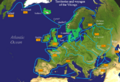 Vikings Voyages
 -
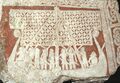 Bildsten med skepp 800-1099 Tjängvide, Gotland
 -
Map of Sweden ca 1280
-
Gustav Vasa
-
Gustave Adolphe at Breitenfeld - Johann Walter
-
Swedish Empire
-
Marten's Poltava
-
Starvation image from Fäderneslandet 1867


Sponsored Health Resource

W8MD Weight Loss, Sleep & MedSpa
Looking for physician-supervised weight loss, semaglutide, tirzepatide, or GLP-1 receptor agonist options? W8MD helps eligible patients in New York City, Brooklyn, New Jersey, Connecticut, Pennsylvania, Delaware, and greater Philadelphia with medical weight loss, sleep medicine, and long-term maintenance support.
GLP-1 specials: Affordable GLP-1 injections NYC and Philadelphia starting from $29.99/week and up for semaglutide with insurance accepted for qualifying visits, and $45/week and up for tirzepatide with insurance accepted for qualifying visits. Self-pay options start from $59.99/week and up for semaglutide and $69.99/week and up for tirzepatide.
- Medical weight loss NYC
- Affordable GLP-1 injections NYC
- Budget GLP-1 weight loss shots Philadelphia
- New Jersey medical weight loss
- NYC medical weight loss blog
- Philadelphia weight loss blog
- Sleep medicine and sleep apnea services
- W8MD MedSpa and wellness
Book a W8MD appointment · View GLP-1 specials
Paid promotional message. Eligibility, pricing, insurance coverage, medication availability, and results vary. Medical evaluation required.

Medical Disclaimer: WikiMD is for informational purposes only and is not a substitute for professional medical advice. Content may be inaccurate or outdated and should not be used for diagnosis or treatment. Always consult your healthcare provider for medical decisions. Verify information with trusted sources such as CDC.gov and NIH.gov. By using this site, you agree that WikiMD is not liable for any outcomes related to its content. See full disclaimer.
Credits:Most images are courtesy of Wikimedia commons, and templates, categories Wikipedia, licensed under CC BY SA or similar.
Translate page: - East Asian
中文,
日本,
한국어,
South Asian
हिन्दी,
தமிழ்,
తెలుగు,
Urdu,
ಕನ್ನಡ,
Southeast Asian
Indonesian,
Vietnamese,
Thai,
မြန်မာဘာသာ,
বাংলা
European
español,
Deutsch,
français,
Greek,
português do Brasil,
polski,
română,
русский,
Nederlands,
norsk,
svenska,
suomi,
Italian
Middle Eastern & African
عربى,
Turkish,
Persian,
Hebrew,
Afrikaans,
isiZulu,
Kiswahili,
Other
Bulgarian,
Hungarian,
Czech,
Swedish,
മലയാളം,
मराठी,
ਪੰਜਾਬੀ,
ગુજરાતી,
Portuguese,
Ukrainian


.svg)


