Testaroli
Testaroli is a type of pasta originating from the regions of Liguria and Tuscany in Italy. It is considered one of the oldest forms of pasta and is traditionally made from a batter of wheat flour, water, and salt.
History[edit]
Testaroli has a rich history dating back to the Etruscan civilization, making it one of the oldest known types of pasta. The name "Testaroli" is derived from "testo", a type of terracotta cooking utensil used by the Etruscans.
Preparation[edit]
The batter for Testaroli is made by mixing wheat flour, water, and salt. This mixture is then poured into a hot, flat pan known as a "testo" and cooked until it forms a thin pancake. The pancake is then cut into squares or diamonds and briefly boiled before serving.
Traditionally, Testaroli is served with pesto, a sauce originating from Liguria, or with a simple sauce of olive oil, garlic, and Parmesan cheese. However, it can also be served with a variety of other sauces according to personal preference.
Cultural Significance[edit]
Testaroli is a significant part of the culinary heritage of Liguria and Tuscany. It is often prepared for special occasions and is a staple in many traditional Italian dishes. The unique preparation method and long history of Testaroli make it a distinctive part of Italian cuisine.
See Also[edit]

-
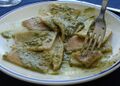 Testaroli with pesto in Pontremoli
 -
Cutting Testaroli
-
 Boba bar process


Medical Disclaimer: WikiMD is for informational purposes only and is not a substitute for professional medical advice. Content may be inaccurate or outdated and should not be used for diagnosis or treatment. Always consult your healthcare provider for medical decisions. Verify information with trusted sources such as CDC.gov and NIH.gov. By using this site, you agree that WikiMD is not liable for any outcomes related to its content. See full disclaimer.
Credits:Most images are courtesy of Wikimedia commons, and templates, categories Wikipedia, licensed under CC BY SA or similar.
Translate page: - East Asian
中文,
日本,
한국어,
South Asian
हिन्दी,
தமிழ்,
తెలుగు,
Urdu,
ಕನ್ನಡ,
Southeast Asian
Indonesian,
Vietnamese,
Thai,
မြန်မာဘာသာ,
বাংলা
European
español,
Deutsch,
français,
Greek,
português do Brasil,
polski,
română,
русский,
Nederlands,
norsk,
svenska,
suomi,
Italian
Middle Eastern & African
عربى,
Turkish,
Persian,
Hebrew,
Afrikaans,
isiZulu,
Kiswahili,
Other
Bulgarian,
Hungarian,
Czech,
Swedish,
മലയാളം,
मराठी,
ਪੰਜਾਬੀ,
ગુજરાતી,
Portuguese,
Ukrainian


