Agarose gel electrophoresis works on the principle of separating molecules by size through a gel matrix. The gel is made from agarose, a polysaccharide extracted from seaweed. When agarose is dissolved in a buffer and allowed to cool, it forms a gel with a network of pores. The size of these pores can be controlled by adjusting the concentration of agarose.
Preparation of the Gel: Agarose is dissolved in a buffer solution and heated until completely melted. The solution is then poured into a casting tray and allowed to solidify.
Running the Gel: The gel is placed in an electrophoresis chamber filled with buffer. An electric current is applied, causing the negatively charged DNA molecules to migrate towards the positive electrode.
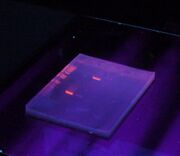
Visualization: After electrophoresis, the gel is stained with a dye such as ethidium bromide or SYBR Green to visualize the DNA bands under ultraviolet light. Agarose gel under UV light
Agarose gel electrophoresis is a simple, cost-effective, and versatile technique. However, it has limitations, such as lower resolution compared to polyacrylamide gel electrophoresis and the inability to separate very small DNA fragments effectively.
Looking for physician-supervised weight loss, semaglutide, tirzepatide, or GLP-1 receptor agonist options? W8MD helps eligible patients in New York City, Brooklyn, New Jersey, Connecticut, Pennsylvania, Delaware, and greater Philadelphia with medical weight loss, sleep medicine, and long-term maintenance support.
GLP-1 specials:Affordable GLP-1 injections NYC and Philadelphia starting from $29.99/week and up for semaglutide with insurance accepted for qualifying visits, and $45/week and up for tirzepatide with insurance accepted for qualifying visits. Self-pay options start from $59.99/week and up for semaglutide and $69.99/week and up for tirzepatide.
Paid promotional message. Eligibility, pricing, insurance coverage, medication availability, and results vary. Medical evaluation required.
Medical Disclaimer: WikiMD is for informational purposes only and is not a substitute for professional medical advice. Content may be inaccurate or outdated and should not be used for diagnosis or treatment. Always consult your healthcare provider for medical decisions. Verify information with trusted sources such as CDC.gov and NIH.gov. By using this site, you agree that WikiMD is not liable for any outcomes related to its content. See full disclaimer.

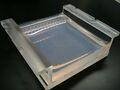 Two percent agarose gel in borate buffer
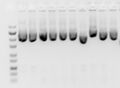 Plasmid DNA ready for electrophoresis
.jpg)




