Artificial vagina
Arabs[edit]
The term "Arabs" refers to a diverse group of people who primarily inhabit the Arab world, which includes 22 countries in the Middle East and North Africa. The Arab identity is defined by a shared language, Arabic, and cultural heritage, although the Arab world is home to a variety of ethnicities, religions, and traditions.
History[edit]
The history of the Arabs dates back to ancient times, with the earliest known references to Arab tribes appearing in Assyrian texts from the 9th century BCE. The Nabataeans, an ancient Arab people, established a kingdom in what is now Jordan, with their capital at Petra. The Nabataeans were known for their advanced architecture and trade networks.
In the 7th century CE, the rise of Islam significantly shaped Arab identity and culture. The Islamic Caliphates, including the Umayyad and Abbasid dynasties, expanded Arab influence across the Middle East, North Africa, and parts of Europe and Asia.
Culture[edit]
Arab culture is rich and varied, encompassing literature, music, art, and cuisine. The Arabic language is a central element of Arab identity, with its classical form used in religious texts and its modern dialects spoken across the Arab world.
Arabic literature has a long and distinguished history, with notable works such as the "One Thousand and One Nights" and the poetry of Imru' al-Qais. Arab music is diverse, with traditional forms such as maqam and modern genres like Arab pop.
Religion[edit]
Islam is the predominant religion among Arabs, with the majority being Sunni Muslims. However, there are also significant populations of Shia Muslims, Christians, and other religious groups within the Arab world. The Kaaba in Mecca is the holiest site in Islam, and the annual Hajj pilgrimage is a key religious event for Muslims.
Modern Arab World[edit]
Today, the Arab world is a region of significant geopolitical importance, with countries like Saudi Arabia, Egypt, and the United Arab Emirates playing key roles in global politics and economics. The Arab League is a regional organization that aims to promote economic, cultural, and political cooperation among its member states.
The Arab world has faced numerous challenges in recent decades, including political instability, economic disparities, and social change. The Arab Spring uprisings of the early 2010s highlighted demands for political reform and greater freedoms across the region.
Related pages[edit]
Gallery[edit]
-
Map showing the distribution of Arab people around the world.
-
The Treasury at Petra, an iconic symbol of the Nabataean Kingdom.
-
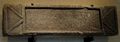 Epitaph of Imru' al-Qais, a pre-Islamic Arab poet.
 -
"Hagar and Ishmael in the Desert" by François-Joseph Navez.
-
Assyrian relief depicting Arabs on camelback.

Sponsored Health Resource

W8MD Weight Loss, Sleep & MedSpa
Looking for physician-supervised weight loss, semaglutide, tirzepatide, or GLP-1 receptor agonist options? W8MD helps eligible patients in New York City, Brooklyn, New Jersey, Connecticut, Pennsylvania, Delaware, and greater Philadelphia with medical weight loss, sleep medicine, and long-term maintenance support.
GLP-1 specials: Affordable GLP-1 injections NYC and Philadelphia starting from $29.99/week and up for semaglutide with insurance accepted for qualifying visits, and $45/week and up for tirzepatide with insurance accepted for qualifying visits. Self-pay options start from $59.99/week and up for semaglutide and $69.99/week and up for tirzepatide.
- Medical weight loss NYC
- Affordable GLP-1 injections NYC
- Budget GLP-1 weight loss shots Philadelphia
- New Jersey medical weight loss
- NYC medical weight loss blog
- Philadelphia weight loss blog
- Sleep medicine and sleep apnea services
- W8MD MedSpa and wellness
Book a W8MD appointment · View GLP-1 specials
Paid promotional message. Eligibility, pricing, insurance coverage, medication availability, and results vary. Medical evaluation required.

Medical Disclaimer: WikiMD is for informational purposes only and is not a substitute for professional medical advice. Content may be inaccurate or outdated and should not be used for diagnosis or treatment. Always consult your healthcare provider for medical decisions. Verify information with trusted sources such as CDC.gov and NIH.gov. By using this site, you agree that WikiMD is not liable for any outcomes related to its content. See full disclaimer.
Credits:Most images are courtesy of Wikimedia commons, and templates, categories Wikipedia, licensed under CC BY SA or similar.
Translate page: - East Asian
中文,
日本,
한국어,
South Asian
हिन्दी,
தமிழ்,
తెలుగు,
Urdu,
ಕನ್ನಡ,
Southeast Asian
Indonesian,
Vietnamese,
Thai,
မြန်မာဘာသာ,
বাংলা
European
español,
Deutsch,
français,
Greek,
português do Brasil,
polski,
română,
русский,
Nederlands,
norsk,
svenska,
suomi,
Italian
Middle Eastern & African
عربى,
Turkish,
Persian,
Hebrew,
Afrikaans,
isiZulu,
Kiswahili,
Other
Bulgarian,
Hungarian,
Czech,
Swedish,
മലയാളം,
मराठी,
ਪੰਜਾਬੀ,
ગુજરાતી,
Portuguese,
Ukrainian


