Diatom
Diatom is a type of algae that is known for its unique ability to create a cell wall composed of silica. Diatoms are a major group of microalgae, and are one of the most common types of phytoplankton.
Overview[edit]
Diatoms are unicellular organisms that belong to the group of algae known as Bacillariophyta. They are characterized by their unique cell wall, or frustule, which is composed of silica. The frustule has a unique and intricate design, which is often used as a diagnostic feature in diatom identification.
Diatoms are found in almost every aquatic environment including fresh and marine waters, soils, and even in the bark of trees. They are a major group of microalgae, and are one of the most common types of phytoplankton.
Biology[edit]
Diatoms are photosynthetic organisms, meaning they use light energy to synthesize food from carbon dioxide and water. They are a key component of aquatic food chains, as they are a primary food source for many marine and freshwater organisms.
Diatoms reproduce both sexually and asexually. During asexual reproduction, each diatom cell divides into two new cells, with each new cell receiving one half of the parent's silica frustule.
Ecological Importance[edit]
Diatoms play a crucial role in the world's ecosystems. They are a primary producer in both marine and freshwater ecosystems, providing food for a wide range of organisms.
In addition, diatoms are important in the global carbon cycle. Through photosynthesis, they absorb carbon dioxide, a greenhouse gas, from the atmosphere. The carbon is then used to build their silica cell walls. When diatoms die, they sink to the bottom of the ocean, taking the carbon with them. This process, known as the biological pump, helps to regulate the Earth's climate.
See Also[edit]
References[edit]

This WikiMD article can only be edited by registered and verified editors. You can log in or register.
-
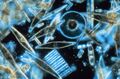 Diatoms through the microscope
 -
Dwindling diatoms and the mixed layer
-
3D animation of the diatom Corethron sp.
-
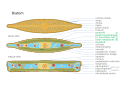 2023 Diatom
 -
Diatomeas Haeckel
-
Shape classification of diatom frustules
-
Structure of diatom frustules
-
Pennate diatom infected with two chytrid-like fungal pathogens
-
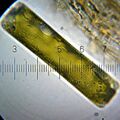 20110123 185042 Diatom


Sponsored Health Resource

W8MD Weight Loss, Sleep & MedSpa
Looking for physician-supervised weight loss, semaglutide, tirzepatide, or GLP-1 receptor agonist options? W8MD helps eligible patients in New York City, Brooklyn, New Jersey, Connecticut, Pennsylvania, Delaware, and greater Philadelphia with medical weight loss, sleep medicine, and long-term maintenance support.
GLP-1 specials: Affordable GLP-1 injections NYC and Philadelphia starting from $29.99/week and up for semaglutide with insurance accepted for qualifying visits, and $45/week and up for tirzepatide with insurance accepted for qualifying visits. Self-pay options start from $59.99/week and up for semaglutide and $69.99/week and up for tirzepatide.
- Medical weight loss NYC
- Affordable GLP-1 injections NYC
- Budget GLP-1 weight loss shots Philadelphia
- New Jersey medical weight loss
- NYC medical weight loss blog
- Philadelphia weight loss blog
- Sleep medicine and sleep apnea services
- W8MD MedSpa and wellness
Book a W8MD appointment · View GLP-1 specials
Paid promotional message. Eligibility, pricing, insurance coverage, medication availability, and results vary. Medical evaluation required.

Medical Disclaimer: WikiMD is for informational purposes only and is not a substitute for professional medical advice. Content may be inaccurate or outdated and should not be used for diagnosis or treatment. Always consult your healthcare provider for medical decisions. Verify information with trusted sources such as CDC.gov and NIH.gov. By using this site, you agree that WikiMD is not liable for any outcomes related to its content. See full disclaimer.
Credits:Most images are courtesy of Wikimedia commons, and templates, categories Wikipedia, licensed under CC BY SA or similar.
Translate page: - East Asian
中文,
日本,
한국어,
South Asian
हिन्दी,
தமிழ்,
తెలుగు,
Urdu,
ಕನ್ನಡ,
Southeast Asian
Indonesian,
Vietnamese,
Thai,
မြန်မာဘာသာ,
বাংলা
European
español,
Deutsch,
français,
Greek,
português do Brasil,
polski,
română,
русский,
Nederlands,
norsk,
svenska,
suomi,
Italian
Middle Eastern & African
عربى,
Turkish,
Persian,
Hebrew,
Afrikaans,
isiZulu,
Kiswahili,
Other
Bulgarian,
Hungarian,
Czech,
Swedish,
മലയാളം,
मराठी,
ਪੰਜਾਬੀ,
ગુજરાતી,
Portuguese,
Ukrainian


