Ovarian serous cystadenoma
Ovarian serous cystadenoma is a type of benign tumor that originates from the ovary. It is the most common type of ovarian tumor, accounting for approximately 20% of all ovarian tumors. The term "serous" refers to the thin, watery fluid that the tumor produces, and "cystadenoma" refers to the cystic nature of the tumor.
Symptoms[edit]
Most ovarian serous cystadenomas are asymptomatic and are discovered incidentally during routine gynecological examination. However, if the tumor becomes large, it may cause abdominal discomfort, bloating, or pain. In rare cases, the tumor may rupture, leading to severe abdominal pain and possible complications.
Diagnosis[edit]
The diagnosis of ovarian serous cystadenoma is typically made through ultrasound imaging, which can reveal the presence of a cystic mass in the ovary. Further diagnostic tests, such as CT scan or MRI, may be performed to better characterize the tumor and rule out other conditions. In some cases, a sample of the fluid within the tumor may be taken for analysis, a procedure known as cyst aspiration.
Treatment[edit]
The treatment for ovarian serous cystadenoma typically involves surgical removal of the tumor. This can often be performed laparoscopically, a minimally invasive procedure that involves small incisions in the abdomen. In some cases, the entire ovary may need to be removed, a procedure known as oophorectomy. Following surgery, most patients have an excellent prognosis, as these tumors are benign and do not spread to other parts of the body.
See also[edit]

This WikiMD article can only be edited by registered and verified editors. You can log in or register.
-
 Ovarian serous cystadenoma - low magnification
 -
 Ovarian serous cystadenoma - intermediate magnification
 -
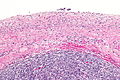 Ovarian serous cystadenoma - intermediate magnification
 -
 Ovarian serous cystadenoma - high magnification
 -
 Ovarian serous cystadenoma - high magnification
 -
 Ovarian serous cystadenoma - very high magnification
 -
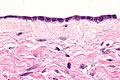 Ovarian serous cystadenoma - extremely high magnification


Sponsored Health Resource

W8MD Weight Loss, Sleep & MedSpa
Looking for physician-supervised weight loss, semaglutide, tirzepatide, or GLP-1 receptor agonist options? W8MD helps eligible patients in New York City, Brooklyn, New Jersey, Connecticut, Pennsylvania, Delaware, and greater Philadelphia with medical weight loss, sleep medicine, and long-term maintenance support.
GLP-1 specials: Affordable GLP-1 injections NYC and Philadelphia starting from $29.99/week and up for semaglutide with insurance accepted for qualifying visits, and $45/week and up for tirzepatide with insurance accepted for qualifying visits. Self-pay options start from $59.99/week and up for semaglutide and $69.99/week and up for tirzepatide.
Medical weight loss NYC | Affordable GLP-1 injections NYC | Budget GLP-1 weight loss shots Philadelphia | New Jersey medical weight loss | NYC medical weight loss | Philadelphia medical weight loss | Sleep clinic NYC | W8MD's Philadelphia GLP-1 doctor | Weight loss prescriptions NYC
Book a W8MD appointment · View GLP-1 specials
Paid promotional message. Eligibility, pricing, insurance coverage, medication availability, and results vary. Medical evaluation required.

Medical Disclaimer: WikiMD is for informational purposes only and is not a substitute for professional medical advice. Content may be inaccurate or outdated and should not be used for diagnosis or treatment. Always consult your healthcare provider for medical decisions. Verify information with trusted sources such as CDC.gov and NIH.gov. By using this site, you agree that WikiMD is not liable for any outcomes related to its content. See full disclaimer.
Credits:Most images are courtesy of Wikimedia commons, and templates, categories Wikipedia, licensed under CC BY SA or similar.
Translate page: - East Asian
中文,
日本,
한국어,
South Asian
हिन्दी,
தமிழ்,
తెలుగు,
Urdu,
ಕನ್ನಡ,
Southeast Asian
Indonesian,
Vietnamese,
Thai,
မြန်မာဘာသာ,
বাংলা
European
español,
Deutsch,
français,
Greek,
português do Brasil,
polski,
română,
русский,
Nederlands,
norsk,
svenska,
suomi,
Italian
Middle Eastern & African
عربى,
Turkish,
Persian,
Hebrew,
Afrikaans,
isiZulu,
Kiswahili,
Other
Bulgarian,
Hungarian,
Czech,
Swedish,
മലയാളം,
मराठी,
ਪੰਜਾਬੀ,
ગુજરાતી,
Portuguese,
Ukrainian

