Pill mill
A Pill Mill is a term used to describe a doctor, clinic or pharmacy that is prescribing or dispensing powerful narcotics inappropriately or for non-medical reasons. Pill mills are often an integral part of a larger opioid epidemic, contributing to the addiction and overdose deaths of a significant number of people in the United States.
Overview[edit]
Pill mills are typically characterized by a number of features. These include the dispensing of drugs without a legitimate medical examination, the absence of a proper medical diagnosis, and the frequent prescribing of an unnecessary amount of pills. The drugs most commonly involved are opioids, benzodiazepines, and muscle relaxants.
Legislation and Enforcement[edit]
In response to the opioid epidemic, many states have enacted legislation to regulate pain management clinics and discourage pill mills. These laws often require clinics to be owned by physicians, to be registered with the state, and to undergo regular inspections. In addition, the Drug Enforcement Administration (DEA) has increased its efforts to shut down pill mills and prosecute those involved.
Impact on Public Health[edit]
Pill mills have a significant impact on public health. They contribute to the high rates of addiction and overdose deaths associated with prescription opioids. In addition, they can lead to an increase in drug trafficking and related crimes in the communities where they operate.
Prevention and Treatment[edit]
Preventing the establishment and operation of pill mills is a key component of addressing the opioid epidemic. This involves a combination of law enforcement, regulation, and public education. In addition, treatment for those addicted to prescription opioids, including medication-assisted treatment (MAT), is an important part of the response to this public health crisis.
See Also[edit]

Pill mill[edit]
-
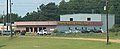 Pill mill in Jasper, Alabama, 2015
 -
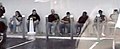 Customers of a Florida pill mill run by Jeff and Chris George wait in chairs on the sidewalk


Sponsored Health Resource

W8MD Weight Loss, Sleep & MedSpa
Looking for physician-supervised weight loss, semaglutide, tirzepatide, or GLP-1 receptor agonist options? W8MD helps eligible patients in New York City, Brooklyn, New Jersey, Connecticut, Pennsylvania, Delaware, and greater Philadelphia with medical weight loss, sleep medicine, and long-term maintenance support.
GLP-1 specials: Affordable GLP-1 injections NYC and Philadelphia starting from $29.99/week and up for semaglutide with insurance accepted for qualifying visits, and $45/week and up for tirzepatide with insurance accepted for qualifying visits. Self-pay options start from $59.99/week and up for semaglutide and $69.99/week and up for tirzepatide.
- Medical weight loss NYC
- Affordable GLP-1 injections NYC
- Budget GLP-1 weight loss shots Philadelphia
- New Jersey medical weight loss
- NYC medical weight loss blog
- Philadelphia weight loss blog
- Sleep medicine and sleep apnea services
- W8MD MedSpa and wellness
Book a W8MD appointment · View GLP-1 specials
Paid promotional message. Eligibility, pricing, insurance coverage, medication availability, and results vary. Medical evaluation required.

Medical Disclaimer: WikiMD is for informational purposes only and is not a substitute for professional medical advice. Content may be inaccurate or outdated and should not be used for diagnosis or treatment. Always consult your healthcare provider for medical decisions. Verify information with trusted sources such as CDC.gov and NIH.gov. By using this site, you agree that WikiMD is not liable for any outcomes related to its content. See full disclaimer.
Credits:Most images are courtesy of Wikimedia commons, and templates, categories Wikipedia, licensed under CC BY SA or similar.
Translate page: - East Asian
中文,
日本,
한국어,
South Asian
हिन्दी,
தமிழ்,
తెలుగు,
Urdu,
ಕನ್ನಡ,
Southeast Asian
Indonesian,
Vietnamese,
Thai,
မြန်မာဘာသာ,
বাংলা
European
español,
Deutsch,
français,
Greek,
português do Brasil,
polski,
română,
русский,
Nederlands,
norsk,
svenska,
suomi,
Italian
Middle Eastern & African
عربى,
Turkish,
Persian,
Hebrew,
Afrikaans,
isiZulu,
Kiswahili,
Other
Bulgarian,
Hungarian,
Czech,
Swedish,
മലയാളം,
मराठी,
ਪੰਜਾਬੀ,
ગુજરાતી,
Portuguese,
Ukrainian

