Radiopharmaceutical
Radiopharmaceuticals are a group of pharmaceutical drugs which have radioactivity. They can be used as diagnostic and therapeutic agents in nuclear medicine. Radiopharmaceuticals are unique medicinal formulations containing radioisotopes which are used in major clinical areas for diagnosis and/or therapy.
History[edit]
The history of radiopharmaceuticals goes back to the discovery of radioactivity by Henri Becquerel in 1896. The first radiopharmaceuticals were developed by George de Hevesy in 1923, when he used naturally radioactive radium to study the dynamics of lead in rats.
Types[edit]
Radiopharmaceuticals can be classified into two major types: diagnostic radiopharmaceuticals and therapeutic radiopharmaceuticals.
Diagnostic Radiopharmaceuticals[edit]
Diagnostic radiopharmaceuticals, when used with medical imaging equipment, allow doctors to see inside the body. They emit gamma rays that can be detected externally by special types of cameras such as gamma cameras or PET scanners. These radiopharmaceuticals are used to examine the blood flow to the brain, functioning of the liver, lungs, heart or kidneys, to assess bone growth, and to confirm other diagnostic results.
Therapeutic Radiopharmaceuticals[edit]
Therapeutic radiopharmaceuticals emit beta particles that destroy cancer cells while sparing surrounding healthy tissue. They are used to treat conditions such as hyperthyroidism, thyroid cancer, blood disorders, pain relief in certain types of bone cancers and other conditions.
Production[edit]
Radiopharmaceuticals are produced by incorporating a radioactive isotope into a pharmaceutical. The process of producing a radiopharmaceutical involves two main steps: the production of the radionuclide and the coupling of this radionuclide to the pharmaceutical.
Regulation[edit]
In many countries, radiopharmaceuticals must be licensed by a national regulatory authority such as the Food and Drug Administration (FDA) in the United States or the European Medicines Agency (EMA) in the European Union.
See also[edit]

This WikiMD article can only be edited by registered and verified editors. You can log in or register.
-
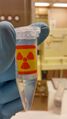 Radiopharmaceutical

Sponsored Health Resource

W8MD Weight Loss, Sleep & MedSpa
Looking for physician-supervised weight loss, semaglutide, tirzepatide, or GLP-1 receptor agonist options? W8MD helps eligible patients in New York City, Brooklyn, New Jersey, Connecticut, Pennsylvania, Delaware, and greater Philadelphia with medical weight loss, sleep medicine, and long-term maintenance support.
GLP-1 specials: Affordable GLP-1 injections NYC and Philadelphia starting from $29.99/week and up for semaglutide with insurance accepted for qualifying visits, and $45/week and up for tirzepatide with insurance accepted for qualifying visits. Self-pay options start from $59.99/week and up for semaglutide and $69.99/week and up for tirzepatide.
- Medical weight loss NYC
- Affordable GLP-1 injections NYC
- Budget GLP-1 weight loss shots Philadelphia
- New Jersey medical weight loss
- NYC medical weight loss blog
- Philadelphia weight loss blog
- Sleep medicine and sleep apnea services
- W8MD MedSpa and wellness
Book a W8MD appointment · View GLP-1 specials
Paid promotional message. Eligibility, pricing, insurance coverage, medication availability, and results vary. Medical evaluation required.

Medical Disclaimer: WikiMD is for informational purposes only and is not a substitute for professional medical advice. Content may be inaccurate or outdated and should not be used for diagnosis or treatment. Always consult your healthcare provider for medical decisions. Verify information with trusted sources such as CDC.gov and NIH.gov. By using this site, you agree that WikiMD is not liable for any outcomes related to its content. See full disclaimer.
Credits:Most images are courtesy of Wikimedia commons, and templates, categories Wikipedia, licensed under CC BY SA or similar.
Translate page: - East Asian
中文,
日本,
한국어,
South Asian
हिन्दी,
தமிழ்,
తెలుగు,
Urdu,
ಕನ್ನಡ,
Southeast Asian
Indonesian,
Vietnamese,
Thai,
မြန်မာဘာသာ,
বাংলা
European
español,
Deutsch,
français,
Greek,
português do Brasil,
polski,
română,
русский,
Nederlands,
norsk,
svenska,
suomi,
Italian
Middle Eastern & African
عربى,
Turkish,
Persian,
Hebrew,
Afrikaans,
isiZulu,
Kiswahili,
Other
Bulgarian,
Hungarian,
Czech,
Swedish,
മലയാളം,
मराठी,
ਪੰਜਾਬੀ,
ગુજરાતી,
Portuguese,
Ukrainian

