Southern Africa
Southern Africa: A Medical Perspective[edit]
Southern Africa is a region that encompasses several countries located at the southernmost part of the African continent. This region includes nations such as South Africa, Botswana, Lesotho, Namibia, Eswatini, Zimbabwe, and Mozambique. From a medical perspective, Southern Africa faces numerous health challenges, including infectious diseases, malnutrition, and a lack of access to healthcare services.
Infectious Diseases[edit]
Southern Africa has a high prevalence of infectious diseases, including HIV/AIDS, tuberculosis, and malaria. The region has the highest rate of HIV/AIDS globally, with South Africa having the largest population of people living with the disease. Tuberculosis is also a significant health issue, often co-existing with HIV/AIDS. Malaria, while not as prevalent as HIV/AIDS or tuberculosis, is still a concern in certain areas, particularly in Mozambique.
Malnutrition[edit]
Malnutrition is a significant health issue in Southern Africa, particularly among children. This is due to a combination of factors, including poverty, food insecurity, and a lack of education about proper nutrition. Malnutrition can lead to a variety of health problems, including stunted growth, weakened immune systems, and increased susceptibility to infectious diseases.
Healthcare Services[edit]
Access to healthcare services is a significant challenge in Southern Africa. Many people in the region live in rural areas, far from healthcare facilities. Additionally, there is a shortage of healthcare professionals, particularly in rural areas. This lack of access to healthcare services contributes to the high rates of disease and mortality in the region.
See Also[edit]
- Health in Africa
- Healthcare in South Africa
- HIV/AIDS in Africa
- Tuberculosis in Africa
- Malaria in Africa
 | This Africa-related article is a stub. You can help WikiMD by expanding the page. |
 | This medical article is a stub. You can help WikiMD by expanding the page. |
-
Southern Africa
-
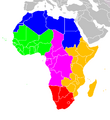 Southern Africa
 -
Southern Africa
-
Victoria Falls, Zambia-Zimbabwe
-
Dune 45, Sossusvlei
-
Kalahari Desert
-
Drakensberg, South Africa
-
Bushmen, Namibia
-
Zulu attack on a Boer laager, 1838
-
Sandton, South Africa
-
Table Mountain
-
Hijacking Hotspot, Gauteng, South Africa

Sponsored Health Resource

W8MD Weight Loss, Sleep & MedSpa
Looking for physician-supervised weight loss, semaglutide, tirzepatide, or GLP-1 receptor agonist options? W8MD helps eligible patients in New York City, Brooklyn, New Jersey, Connecticut, Pennsylvania, Delaware, and greater Philadelphia with medical weight loss, sleep medicine, and long-term maintenance support.
GLP-1 specials: Affordable GLP-1 injections NYC and Philadelphia starting from $29.99/week and up for semaglutide with insurance accepted for qualifying visits, and $45/week and up for tirzepatide with insurance accepted for qualifying visits. Self-pay options start from $59.99/week and up for semaglutide and $69.99/week and up for tirzepatide.
Medical weight loss NYC | Affordable GLP-1 injections NYC | Budget GLP-1 weight loss shots Philadelphia | New Jersey medical weight loss | NYC medical weight loss | Philadelphia medical weight loss | Sleep clinic NYC | W8MD's Philadelphia GLP-1 doctor | Weight loss prescriptions NYC
Book a W8MD appointment · View GLP-1 specials
Paid promotional message. Eligibility, pricing, insurance coverage, medication availability, and results vary. Medical evaluation required.

Medical Disclaimer: WikiMD is for informational purposes only and is not a substitute for professional medical advice. Content may be inaccurate or outdated and should not be used for diagnosis or treatment. Always consult your healthcare provider for medical decisions. Verify information with trusted sources such as CDC.gov and NIH.gov. By using this site, you agree that WikiMD is not liable for any outcomes related to its content. See full disclaimer.
Credits:Most images are courtesy of Wikimedia commons, and templates, categories Wikipedia, licensed under CC BY SA or similar.
Translate page: - East Asian
中文,
日本,
한국어,
South Asian
हिन्दी,
தமிழ்,
తెలుగు,
Urdu,
ಕನ್ನಡ,
Southeast Asian
Indonesian,
Vietnamese,
Thai,
မြန်မာဘာသာ,
বাংলা
European
español,
Deutsch,
français,
Greek,
português do Brasil,
polski,
română,
русский,
Nederlands,
norsk,
svenska,
suomi,
Italian
Middle Eastern & African
عربى,
Turkish,
Persian,
Hebrew,
Afrikaans,
isiZulu,
Kiswahili,
Other
Bulgarian,
Hungarian,
Czech,
Swedish,
മലയാളം,
मराठी,
ਪੰਜਾਬੀ,
ગુજરાતી,
Portuguese,
Ukrainian


.jpg)

.jpg)
.jpg)


.jpg)