List of Indian soups and stews
Indian cuisine is renowned for its diverse range of dishes, including a variety of soups and stews. These dishes are often characterized by their rich flavors, aromatic spices, and the use of local ingredients. This article provides a comprehensive list of Indian soups and stews.
Soups[edit]
Rasam is a South Indian soup traditionally prepared using tamarind juice as a base, with the addition of tomato, chili pepper, pepper, cumin and other spices as seasonings.
Mulligatawny is a soup originating from South Indian cuisine, made from a mix of lentils, vegetables, rice, and spices. The name 'Mulligatawny' means 'pepper water' in Tamil.
Shorba is a type of soup popular in North India and Pakistan. It is usually prepared with meat, lentils and vegetables, and is often served with bread.
Tomato Saar is a soup from the cuisine of Maharashtra in Western India. It is made from tomatoes, coconut milk, and a blend of spices.
Stews[edit]
Sambar is a lentil-based vegetable stew, cooked with pigeon pea and tamarind broth. It is popular in South Indian and Sri Lankan Tamil cuisines.
Kadhi is a thick, yogurt-based stew that contains vegetable fritters called pakoras. It is popular in North and West India.
Khoresh is a generic term for stew in Persian cuisine. It is usually served with basmati rice.
Dal is a term used in the Indian subcontinent for dried, split pulses that do not require pre-soaking. Dal is often translated as "lentils" but actually refers to a split version of a number of lentils, peas, chickpeas (chana), kidney beans and so on.
See also[edit]
This is a non-exhaustive food and drink related list.

List of Indian soups and stews[edit]
-
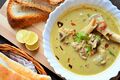 Hyderabadi marag
 -
Dal makhani
-
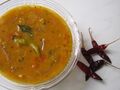 Pumpkin sambar
 -
Alu matar
-
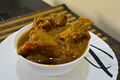 Bengali Mutton Curry
 -
 Paya Curry cooked in Marathi Style
 -
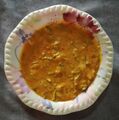 Singhrian jo Raabro (Khaatiyo)


.jpg)
Sponsored Health Resource

W8MD Weight Loss, Sleep & MedSpa
Looking for physician-supervised weight loss, semaglutide, tirzepatide, or GLP-1 receptor agonist options? W8MD helps eligible patients in New York City, Brooklyn, New Jersey, Connecticut, Pennsylvania, Delaware, and greater Philadelphia with medical weight loss, sleep medicine, and long-term maintenance support.
GLP-1 specials: Affordable GLP-1 injections NYC and Philadelphia starting from $29.99/week and up for semaglutide with insurance accepted for qualifying visits, and $45/week and up for tirzepatide with insurance accepted for qualifying visits. Self-pay options start from $59.99/week and up for semaglutide and $69.99/week and up for tirzepatide.
Medical weight loss NYC | Affordable GLP-1 injections NYC | Budget GLP-1 weight loss shots Philadelphia | New Jersey medical weight loss | NYC medical weight loss | Philadelphia medical weight loss | Sleep clinic NYC | W8MD's Philadelphia GLP-1 doctor | Weight loss prescriptions NYC
Book a W8MD appointment · View GLP-1 specials
Paid promotional message. Eligibility, pricing, insurance coverage, medication availability, and results vary. Medical evaluation required.

Medical Disclaimer: WikiMD is for informational purposes only and is not a substitute for professional medical advice. Content may be inaccurate or outdated and should not be used for diagnosis or treatment. Always consult your healthcare provider for medical decisions. Verify information with trusted sources such as CDC.gov and NIH.gov. By using this site, you agree that WikiMD is not liable for any outcomes related to its content. See full disclaimer.
Credits:Most images are courtesy of Wikimedia commons, and templates, categories Wikipedia, licensed under CC BY SA or similar.
Translate page: - East Asian
中文,
日本,
한국어,
South Asian
हिन्दी,
தமிழ்,
తెలుగు,
Urdu,
ಕನ್ನಡ,
Southeast Asian
Indonesian,
Vietnamese,
Thai,
မြန်မာဘာသာ,
বাংলা
European
español,
Deutsch,
français,
Greek,
português do Brasil,
polski,
română,
русский,
Nederlands,
norsk,
svenska,
suomi,
Italian
Middle Eastern & African
عربى,
Turkish,
Persian,
Hebrew,
Afrikaans,
isiZulu,
Kiswahili,
Other
Bulgarian,
Hungarian,
Czech,
Swedish,
മലയാളം,
मराठी,
ਪੰਜਾਬੀ,
ગુજરાતી,
Portuguese,
Ukrainian


