Royal Society
The Royal Society, formally known as The Royal Society of London for Improving Natural Knowledge, is a learned society and the United Kingdom's national science academy. Founded on 28 November 1660, it is the oldest national scientific institution in the world.
History[edit]
The Royal Society started from groups of physicians and natural philosophers, meeting at a variety of locations, including Gresham College in London. They were influenced by the "new science", as promoted by Francis Bacon in his New Atlantis, from approximately 1645 onwards.
Fellowship[edit]
Fellowship of the Royal Society (FRS, ForMemRS and HonFRS) is an award granted to individuals that the Royal Society of London judges to have made a 'substantial contribution to the improvement of natural knowledge, including mathematics, engineering science and medical science'.
Activities[edit]
The society acts as a scientific advisor to the British government. The society is governed by its council, which is chaired by the society's president, according to a set of statutes and standing orders.
Publications[edit]
The Royal Society publishes a range of scientifically rigorous journals, including Philosophical Transactions of the Royal Society, Proceedings of the Royal Society, Biology Letters, Journal of the Royal Society Interface, and Interface Focus.
See also[edit]
- List of Royal Society members
- List of female Fellows of the Royal Society
- List of Presidents of the Royal Society
References[edit]
External links[edit]

This WikiMD article can only be edited by registered and verified editors. You can log in or register.
-
Coat of arms of the Royal Society
-
Royal Society entrance
-
John Evelyn 1687
-
Royal Society Mace
-
 Godfrey Kneller - Isaac Newton 1689
 -
 2nd Earl of Hardwicke
 -
 Burlington House ILN 1873
 -
Arms of the Royal Society
-
J.J. Thomson
-
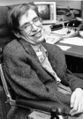 Stephen Hawking
 -
The Royal Society - Senate House History Day 2019
-
Royal Society 2004


Medical Disclaimer: WikiMD is for informational purposes only and is not a substitute for professional medical advice. Content may be inaccurate or outdated and should not be used for diagnosis or treatment. Always consult your healthcare provider for medical decisions. Verify information with trusted sources such as CDC.gov and NIH.gov. By using this site, you agree that WikiMD is not liable for any outcomes related to its content. See full disclaimer.
Credits:Most images are courtesy of Wikimedia commons, and templates, categories Wikipedia, licensed under CC BY SA or similar.
Translate page: - East Asian
中文,
日本,
한국어,
South Asian
हिन्दी,
தமிழ்,
తెలుగు,
Urdu,
ಕನ್ನಡ,
Southeast Asian
Indonesian,
Vietnamese,
Thai,
မြန်မာဘာသာ,
বাংলা
European
español,
Deutsch,
français,
Greek,
português do Brasil,
polski,
română,
русский,
Nederlands,
norsk,
svenska,
suomi,
Italian
Middle Eastern & African
عربى,
Turkish,
Persian,
Hebrew,
Afrikaans,
isiZulu,
Kiswahili,
Other
Bulgarian,
Hungarian,
Czech,
Swedish,
മലയാളം,
मराठी,
ਪੰਜਾਬੀ,
ગુજરાતી,
Portuguese,
Ukrainian


