Anthropometry
Anthropometry is the study of measurement and proportions of the human body.
Alphonse Bertillon and Criminology[edit]
Anthropometry was first created by Alphonse Bertillon (April 24, 1853 – February 13, 1914). He was born in Paris, France. When he became a police officer, he created Anthropometry so that criminals could be easily identified. The system helped the police to get through many criminal records quicker. Having produced a set of characteristics of criminals, it became easier for the police to identify offenders.
Anthropometric measurements[edit]
The system involves 10 measurements:
- Height
- Stretch
- Bust
- Head length (crown to forehead)
- Head width (temple to temple)
- Cheek width
- Ear length (both left and right)
- Middle finger
- Foot length
- Cubit (length from elbow to middle finger)
References[edit]
- Burnett, “Introduction to Human factors, Human anatomy and Biomechanics”. Web.10 Dec.2011
- "Anthropometry." Ergonomics4schools. Web. 10 Dec. 2011
- Webster's Online Dictionary - Web. 11 Dec. 2011

This WikiMD article can only be edited by registered and verified editors. You can log in or register.
| Human regional anatomy | ||||||||||
|---|---|---|---|---|---|---|---|---|---|---|
|
| Human systems and organs | ||||||||||||||
|---|---|---|---|---|---|---|---|---|---|---|---|---|---|---|
|
-
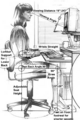 Anthropometry
 -
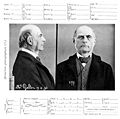 Francis Galton at Bertillon's laboratory, 1893
 -
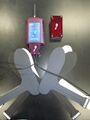 Insole pressure measurement device
 -
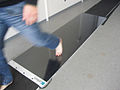 Foot pressure measurement device
 -
 Fingerprints taken by William James Herschel, 1859-1860
 -
 Iris recognition
 -
 Anthropometry

.jpg)


Sponsored Health Resource

W8MD Weight Loss, Sleep & MedSpa
Looking for physician-supervised weight loss, semaglutide, tirzepatide, or GLP-1 receptor agonist options? W8MD helps eligible patients in New York City, Brooklyn, New Jersey, Connecticut, Pennsylvania, Delaware, and greater Philadelphia with medical weight loss, sleep medicine, and long-term maintenance support.
GLP-1 specials: Affordable GLP-1 injections NYC and Philadelphia starting from $29.99/week and up for semaglutide with insurance accepted for qualifying visits, and $45/week and up for tirzepatide with insurance accepted for qualifying visits. Self-pay options start from $59.99/week and up for semaglutide and $69.99/week and up for tirzepatide.
- Medical weight loss NYC
- Affordable GLP-1 injections NYC
- Budget GLP-1 weight loss shots Philadelphia
- New Jersey medical weight loss
- NYC medical weight loss blog
- Philadelphia weight loss blog
- Sleep medicine and sleep apnea services
- W8MD MedSpa and wellness
Book a W8MD appointment · View GLP-1 specials
Paid promotional message. Eligibility, pricing, insurance coverage, medication availability, and results vary. Medical evaluation required.

Medical Disclaimer: WikiMD is for informational purposes only and is not a substitute for professional medical advice. Content may be inaccurate or outdated and should not be used for diagnosis or treatment. Always consult your healthcare provider for medical decisions. Verify information with trusted sources such as CDC.gov and NIH.gov. By using this site, you agree that WikiMD is not liable for any outcomes related to its content. See full disclaimer.
Credits:Most images are courtesy of Wikimedia commons, and templates, categories Wikipedia, licensed under CC BY SA or similar.
Translate page: - East Asian
中文,
日本,
한국어,
South Asian
हिन्दी,
தமிழ்,
తెలుగు,
Urdu,
ಕನ್ನಡ,
Southeast Asian
Indonesian,
Vietnamese,
Thai,
မြန်မာဘာသာ,
বাংলা
European
español,
Deutsch,
français,
Greek,
português do Brasil,
polski,
română,
русский,
Nederlands,
norsk,
svenska,
suomi,
Italian
Middle Eastern & African
عربى,
Turkish,
Persian,
Hebrew,
Afrikaans,
isiZulu,
Kiswahili,
Other
Bulgarian,
Hungarian,
Czech,
Swedish,
മലയാളം,
मराठी,
ਪੰਜਾਬੀ,
ગુજરાતી,
Portuguese,
Ukrainian

