Copper deficiency

Editor-In-Chief: Prab R Tumpati, MD
Obesity, Sleep & Internal medicine
Founder, WikiMD Wellnesspedia &
W8MD's weight loss doctor NYC
Philadelphia GLP-1 weight loss and GLP-1 clinic NYC
| Copper deficiency | |
|---|---|

| |
| Synonyms | Hypocupremia |
| Pronounce | N/A |
| Specialty | N/A |
| Symptoms | Anemia, neutropenia, osteoporosis, myelopathy, peripheral neuropathy |
| Complications | Neurological disorders, bone abnormalities |
| Onset | Variable |
| Duration | Chronic if untreated |
| Types | N/A |
| Causes | Malabsorption, bariatric surgery, excessive zinc intake |
| Risks | Gastrointestinal surgery, parenteral nutrition, zinc supplementation |
| Diagnosis | Blood test for copper levels, bone marrow biopsy |
| Differential diagnosis | Iron deficiency anemia, vitamin B12 deficiency, zinc toxicity |
| Prevention | Adequate dietary intake of copper, monitoring in at-risk individuals |
| Treatment | Copper supplementation, dietary modification |
| Medication | N/A |
| Prognosis | Good with treatment |
| Frequency | Rare |
| Deaths | N/A |
Copper deficiency is a condition that arises due to insufficient copper, a necessary nutrient, in the body. Copper is required for the proper functioning of the body, including the health of nerves, bones, collagen, and the skin pigment melanin. A deficiency in copper can lead to health problems such as anemia, low body temperature, bone fractures, and irregular heartbeat.
Causes[edit]
Copper deficiency can be caused by a variety of factors. These include:
- Malnutrition: This is the most common cause of copper deficiency. People who are malnourished, either due to a lack of food or a diet that does not provide enough nutrients, can develop a copper deficiency.
- Malabsorption: Some people have conditions that prevent their body from absorbing enough copper. These conditions include Celiac disease, Crohn's disease, and other digestive disorders.
- Zinc toxicity: Consuming too much zinc can interfere with the body's ability to absorb copper, leading to a deficiency.
- Genetic disorders: Certain genetic disorders can affect the body's ability to metabolize and use copper. These include Menkes disease and Wilson's disease.
Symptoms[edit]
The symptoms of copper deficiency can vary depending on the severity of the deficiency and the individual's overall health. Common symptoms include:
- Fatigue and weakness
- Pale skin and lips
- Sensitivity to cold
- Easy bruising and bleeding
- Unexplained weight loss
- Frequent sickness or infection
- Bone fractures
- Irregular heartbeat
Diagnosis[edit]
Diagnosing copper deficiency typically involves a physical examination and a series of tests. These tests may include blood tests to measure the level of copper in the body, as well as tests to assess the individual's overall health and to identify any underlying conditions that may be causing the deficiency.
Treatment[edit]
Treatment for copper deficiency typically involves increasing the amount of copper in the diet. This can be achieved through dietary changes or through the use of supplements. In severe cases, copper injections may be required.
Prevention[edit]
Preventing copper deficiency involves ensuring that the diet contains enough copper. Foods that are high in copper include shellfish, whole grains, beans, nuts, potatoes, and organ meats. It's also important to avoid consuming too much zinc, as this can interfere with the body's ability to absorb copper.
Gallery[edit]
-
Menkes disease symptoms
-
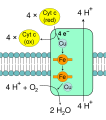 Cytochrome c oxidase complex (Complex IV)
 -
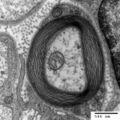 Structure of a myelinated neuron


Sponsored Health Resource

W8MD Weight Loss, Sleep & MedSpa
Looking for physician-supervised weight loss, semaglutide, tirzepatide, or GLP-1 receptor agonist options? W8MD helps eligible patients in New York City, Brooklyn, New Jersey, Connecticut, Pennsylvania, Delaware, and greater Philadelphia with medical weight loss, sleep medicine, and long-term maintenance support.
GLP-1 specials: Affordable GLP-1 injections NYC and Philadelphia starting from $29.99/week and up for semaglutide with insurance accepted for qualifying visits, and $45/week and up for tirzepatide with insurance accepted for qualifying visits. Self-pay options start from $59.99/week and up for semaglutide and $69.99/week and up for tirzepatide.
- Medical weight loss NYC
- Affordable GLP-1 injections NYC
- Budget GLP-1 weight loss shots Philadelphia
- New Jersey medical weight loss
- NYC medical weight loss blog
- Philadelphia weight loss blog
- Sleep medicine and sleep apnea services
- W8MD MedSpa and wellness
Book a W8MD appointment · View GLP-1 specials
Paid promotional message. Eligibility, pricing, insurance coverage, medication availability, and results vary. Medical evaluation required.

Medical Disclaimer: WikiMD is for informational purposes only and is not a substitute for professional medical advice. Content may be inaccurate or outdated and should not be used for diagnosis or treatment. Always consult your healthcare provider for medical decisions. Verify information with trusted sources such as CDC.gov and NIH.gov. By using this site, you agree that WikiMD is not liable for any outcomes related to its content. See full disclaimer.
Credits:Most images are courtesy of Wikimedia commons, and templates, categories Wikipedia, licensed under CC BY SA or similar.
Translate page: - East Asian
中文,
日本,
한국어,
South Asian
हिन्दी,
தமிழ்,
తెలుగు,
Urdu,
ಕನ್ನಡ,
Southeast Asian
Indonesian,
Vietnamese,
Thai,
မြန်မာဘာသာ,
বাংলা
European
español,
Deutsch,
français,
Greek,
português do Brasil,
polski,
română,
русский,
Nederlands,
norsk,
svenska,
suomi,
Italian
Middle Eastern & African
عربى,
Turkish,
Persian,
Hebrew,
Afrikaans,
isiZulu,
Kiswahili,
Other
Bulgarian,
Hungarian,
Czech,
Swedish,
മലയാളം,
मराठी,
ਪੰਜਾਬੀ,
ગુજરાતી,
Portuguese,
Ukrainian


