Neuromyelitis optica spectrum disorder

Editor-In-Chief: Prab R Tumpati, MD
Obesity, Sleep & Internal medicine
Founder, WikiMD Wellnesspedia &
W8MD's weight loss doctor NYC
Philadelphia GLP-1 weight loss and GLP-1 clinic NYC
| Neuromyelitis optica spectrum disorder | |
|---|---|

| |
| Synonyms | N/A |
| Pronounce | N/A |
| Specialty | N/A |
| Symptoms | Optic neuritis, transverse myelitis, nausea, vomiting, hiccups, paralysis, blindness |
| Complications | Blindness, paralysis, bladder dysfunction, bowel dysfunction |
| Onset | Typically in adulthood |
| Duration | Chronic |
| Types | N/A |
| Causes | Autoimmune disease |
| Risks | Genetic predisposition, infections, environmental factors |
| Diagnosis | MRI, serum aquaporin-4 antibody test, lumbar puncture |
| Differential diagnosis | Multiple sclerosis, acute disseminated encephalomyelitis, myelitis |
| Prevention | N/A |
| Treatment | Immunosuppressive therapy, plasmapheresis, intravenous immunoglobulin |
| Medication | Rituximab, Azathioprine, Mycophenolate mofetil |
| Prognosis | Variable; can lead to significant disability |
| Frequency | Rare |
| Deaths | Rarely directly fatal, but complications can be severe |
== Alternate names ==
Devic syndrome; NMO; Devic's neuromyelitis optica; Devic disease; NMO spectrum disorder; Neuromyelitis optica; Neuromyelitis optica spectrum disorders
Definition[edit]
Neuromyelitis optica spectrum disorders (NMOSD) affect the spinal cord and optic nerves (nerves that carry visual messages to and from the brain).
Epidemiology[edit]
It has been estimated that between 0.5 - 4.4/100,000 people has a neuromyelitis optica spectrum disorder. It has been reported to be more prevalent in Asians and Africans.
Cause[edit]
- The cause of neuromyelitis optica spectrum disorders (NMOSD) is unknown.
- It is considered an autoimmune disease in which the immune system mistakenly attacks cells in the spinal cord and optic nerves.
- Many people who develop NMOSD have another autoimmune disease.
- It is also possible that genetic factors may be involved.
Onset[edit]
Symptoms typically begin in adulthood but can start at any age.
Signs and symptoms[edit]
Signs and symptoms may include:
- Inflammation of the optic nerve (optic neuritis)
- Temporary vision loss
- Inflammation of the spinal cord (acute transverse myelitis)
- Pain
- Abnormal sensations
- Weakness in the arms and legs
- Bladder and bowel control problems
- Episodes of nausea and vomiting
- Optic neuritis tends to occur suddenly and causes eye pain and varying degrees of vision loss.
- Transverse myelitis develops over hours or days.
- Most people with NMOSD have episodes or "attacks" of symptoms months or years apart (the relapsing form), while others have a single episode lasting several months.
- NMOSD may cause permanent disability.
Clinical presntation[edit]
For most diseases, symptoms will vary from person to person. People with the same disease may not have all the symptoms listed. 80%-99% of people have these symptoms
- Autoimmune antibody positivity
- Functional abnormality of the bladder
- Myelitis(Inflammation of spinal cord)
- Neuronal loss in central nervous system(Loss of brain cells)
- Ocular pain(Eye pain)
- Optic neuritis
- Paraplegia(Leg paralysis)
- Peripheral demyelination
- Sensory impairment
- Visual loss(Loss of vision)
30%-79% of people have these symptoms
- Abnormality of brain morphology(Abnormal shape of brain)
5%-29% of people have these symptoms
- CSF pleocytosis
- Nausea
- Recurrent singultus(Recurrent hiccup)
- Respiratory failure
Diagnosis[edit]
- A diagnosis of neuromyelitis optica spectrum disorder (NMOSD) is based upon a clinical examination looking for the presence of characteristic symptoms and imaging studies (MRI) of the brain, spinal cord, and eyes.
- Additional testing may include a blood test looking for a specific type of antibody and a spinal tap to collect a small amount of fluid that surrounds the brain and spinal cord to look for white blood cells.
Treatment[edit]
- There is no cure for NMO.
- The U.S.Food and Drug Administration (FDA) has approved three drug treatments (eculizumab, inebilizumab-cdon, and satralizumab-mwge) which can be injected to reduce the risk of relapses in adults who are anti-aquaporin-4 antibody positive.
- NMO relapses and attacks are often treated with corticosteroid drugs and plasma exchange (also called plasmapheresis, a process used to remove harmful antibodies from the bloodstream).
- Immunosuppressvie drugs used to prevent attacks include mycophenolate mofetil, rituximab, and azathioprine.
- Pain, stiffness, muscle spasms, and bladder and bowel control problems can be managed with medications and therapies.
- Individuals with major disability will require the combined efforts to physical and occupational therapists, along with social services professionals to address complex rehabilitation needs.
Gallery[edit]
-
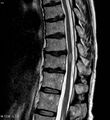 MRI image of transverse myelitis
 -
 Chemical structure of Methylprednisolone
 -
 Portrait of Thomas Clifford Allbutt


| Demyelinating diseases of the central nervous system | ||||||||
|---|---|---|---|---|---|---|---|---|
|
| Diseases of the nervous system, primarily CNS (G04–G47, 323–349) | ||||||||||||||||||||
|---|---|---|---|---|---|---|---|---|---|---|---|---|---|---|---|---|---|---|---|---|
|
NIH genetic and rare disease info[edit]
Neuromyelitis optica spectrum disorder is a rare disease.
| Rare and genetic diseases | ||||||
|---|---|---|---|---|---|---|
|
Rare diseases - Neuromyelitis optica spectrum disorder
|

Sponsored Health Resource

W8MD Weight Loss, Sleep & MedSpa
Looking for physician-supervised weight loss, semaglutide, tirzepatide, or GLP-1 receptor agonist options? W8MD helps eligible patients in New York City, Brooklyn, New Jersey, Connecticut, Pennsylvania, Delaware, and greater Philadelphia with medical weight loss, sleep medicine, and long-term maintenance support.
GLP-1 specials: Affordable GLP-1 injections NYC and Philadelphia starting from $29.99/week and up for semaglutide with insurance accepted for qualifying visits, and $45/week and up for tirzepatide with insurance accepted for qualifying visits. Self-pay options start from $59.99/week and up for semaglutide and $69.99/week and up for tirzepatide.
- Medical weight loss NYC
- Affordable GLP-1 injections NYC
- Budget GLP-1 weight loss shots Philadelphia
- New Jersey medical weight loss
- NYC medical weight loss blog
- Philadelphia weight loss blog
- Sleep medicine and sleep apnea services
- W8MD MedSpa and wellness
Book a W8MD appointment · View GLP-1 specials
Paid promotional message. Eligibility, pricing, insurance coverage, medication availability, and results vary. Medical evaluation required.

Medical Disclaimer: WikiMD is for informational purposes only and is not a substitute for professional medical advice. Content may be inaccurate or outdated and should not be used for diagnosis or treatment. Always consult your healthcare provider for medical decisions. Verify information with trusted sources such as CDC.gov and NIH.gov. By using this site, you agree that WikiMD is not liable for any outcomes related to its content. See full disclaimer.
Credits:Most images are courtesy of Wikimedia commons, and templates, categories Wikipedia, licensed under CC BY SA or similar.
Translate page: - East Asian
中文,
日本,
한국어,
South Asian
हिन्दी,
தமிழ்,
తెలుగు,
Urdu,
ಕನ್ನಡ,
Southeast Asian
Indonesian,
Vietnamese,
Thai,
မြန်မာဘာသာ,
বাংলা
European
español,
Deutsch,
français,
Greek,
português do Brasil,
polski,
română,
русский,
Nederlands,
norsk,
svenska,
suomi,
Italian
Middle Eastern & African
عربى,
Turkish,
Persian,
Hebrew,
Afrikaans,
isiZulu,
Kiswahili,
Other
Bulgarian,
Hungarian,
Czech,
Swedish,
മലയാളം,
मराठी,
ਪੰਜਾਬੀ,
ગુજરાતી,
Portuguese,
Ukrainian

